A second-generation Toyota Mirai carries 5.6 kg of hydrogen. Burned in a fuel cell at the lower heating value of 33.3 kWh per kilogram, that is about 186 kWh of chemical energy, enough for roughly 650 km. At 0 °C and normal atmospheric pressure the same 5.6 kg would fill about 62 cubic meters, the volume of a small bedroom. The car gets it into three tubes under the floor by squeezing it to 700 bar, and that single fact sums up the whole field of hydrogen storage: the molecule is energy-rich by weight and almost empty by volume.
Hydrogen gas has a density of 0.0899 kg/m³ at 0 °C and 1 atm, about one fourteenth of air. Per kilogram it beats every hydrocarbon. Per liter it loses to all of them, even when compressed or liquefied, and the gap is why there are so many competing hydrogen storage methods instead of one standard tank.
Why the numbers fight each other
The two figures that matter are energy per kilogram and energy per liter. On the first, hydrogen's lower heating value of 120 MJ/kg is about 2.4 times that of methane (50 MJ/kg) and close to three times that of gasoline. On the second, a cubic meter of hydrogen at room pressure holds 10.8 MJ against 35.8 MJ for methane.
Compression and cooling close part of the gap. They never close all of it.
| Form | Conditions | Density (kg H₂/m³) | Energy (kWh/L, LHV) |
|---|---|---|---|
| Gas | 0 °C, 1 atm | 0.0899 | 0.003 |
| Compressed gas | 350 bar | about 24 | about 0.8 |
| Compressed gas | 700 bar | about 40 | about 1.3 |
| Liquid | −252.8 °C, ~1 bar | 70.8 | about 2.4 |
| Liquid ammonia (as carrier) | −33 °C, 1 bar | about 121 | about 4.0 |
| Gasoline (for comparison) | ambient | — | roughly 9 |
These are the densities of the fuel alone. A tank, its valves, insulation or host material all add weight and volume, so system figures are always lower. That gap between the fuel and the system is what the DOE targets further down are written around.
Hydrogen storage methods side by side
The field splits along the line the U.S. Department of Energy draws: physical storage, where hydrogen stays H₂ and is only compressed or cooled, and materials-based storage, where it is bound to a solid or a liquid and has to be released again. Physical storage dominates in practice. Materials-based storage dominates in research papers.
| Method | Typical conditions | What limits it |
|---|---|---|
| Compressed gas (Type I–IV cylinders) | 180–700 bar, ambient temperature | Volume, carbon fiber cost, compression energy |
| Liquid hydrogen | −253 °C, a few bar | Liquefaction energy, boil-off |
| Cryo-compressed | Cryogenic, up to about 350 bar | Complex tank and fueling hardware |
| Metal hydrides | Near ambient to over 300 °C | Weight, heat management |
| LOHC and ammonia | Liquid at or near ambient | Energy to release the hydrogen, purity |
| Adsorbents and MOFs | About 77 K | Cryogenic operation, low capacity at room temperature |
| Salt caverns and other geological storage | Underground, tens to over 100 bar | Geology, site availability |
A useful way to read the table of hydrogen storage methods: the top two rows are what actually runs today in cars, buses, trailers and rocket launch pads. The bottom row is how large stocks are held. Everything between them is either niche or still working toward a commercial case.
Compressed gas: 350 and 700 bar hydrogen storage tanks
Most hydrogen in the world sits in pressure vessels. The pressure classes have settled on two numbers for vehicles: 350 bar (about 5,000 psi), common on buses, trucks and forklifts, and 700 bar (about 10,000 psi) for passenger cars where space is tight. Industrial cylinders and tube trailers run lower, from about 180 bar (roughly 2,600 psi) upward.
The cylinder types follow the same numbering used for natural gas tanks in ISO 11439:
- Type I: all steel. Cheap and heavy, used for stationary banks and industrial cylinders.
- Type II: steel liner with a hoop wrap of composite.
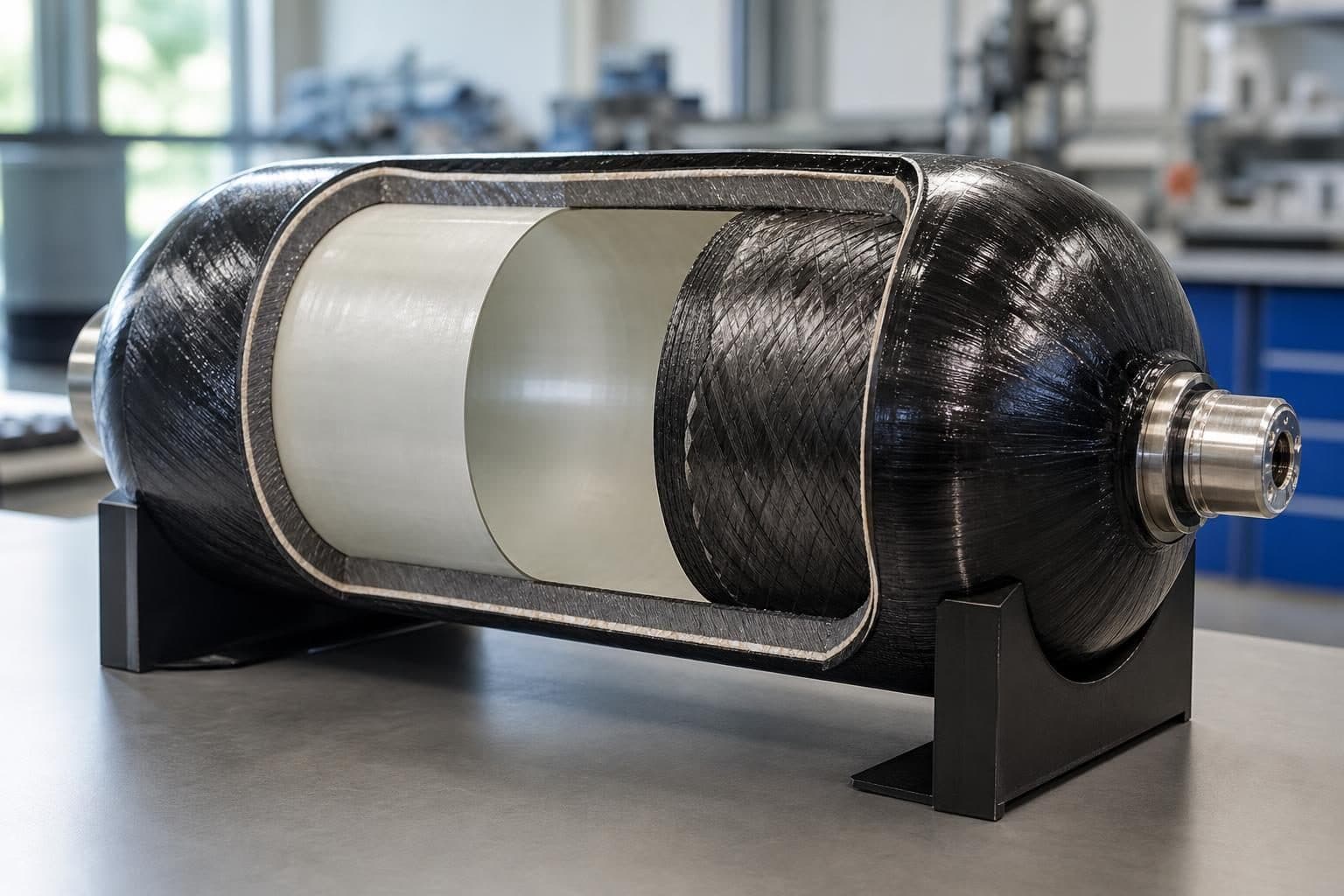
- Type III: aluminum liner fully wrapped in carbon fiber composite.
- Type IV: polymer liner fully wrapped in carbon fiber composite, the standard for 700 bar vehicle tanks.
The liner only seals. The carbon fiber carries the load, and it is also where the money goes. A TIAX cost analysis cited by the DOE put the carbon fiber composite at about three quarters of a 700 bar tank's cost, and DOE reviews keep naming carbon fiber as the primary cost driver. The DOE's 2025 program record estimated the projected cost of a 700 bar Type IV system at $12.7 per kWh, down from $16.9 in 2019, still well above the $9/kWh target for 2025.
A worked example shows why cars go to 700 bar. At about 40 kg/m³, a tank with 140 liters of internal volume holds about 5.6 kg of hydrogen. At 350 bar and about 24 kg/m³, the same 5.6 kg needs roughly 233 liters, a volume that a sedan cannot hide under its seats. A bus with racks of tanks on the roof has the space, and 350 bar remains the norm there.
Weight is the other side. In the 2014 Mirai, the hydrogen was only about 5.7 % of the full tank system's weight. The rest was liner, composite and fittings.
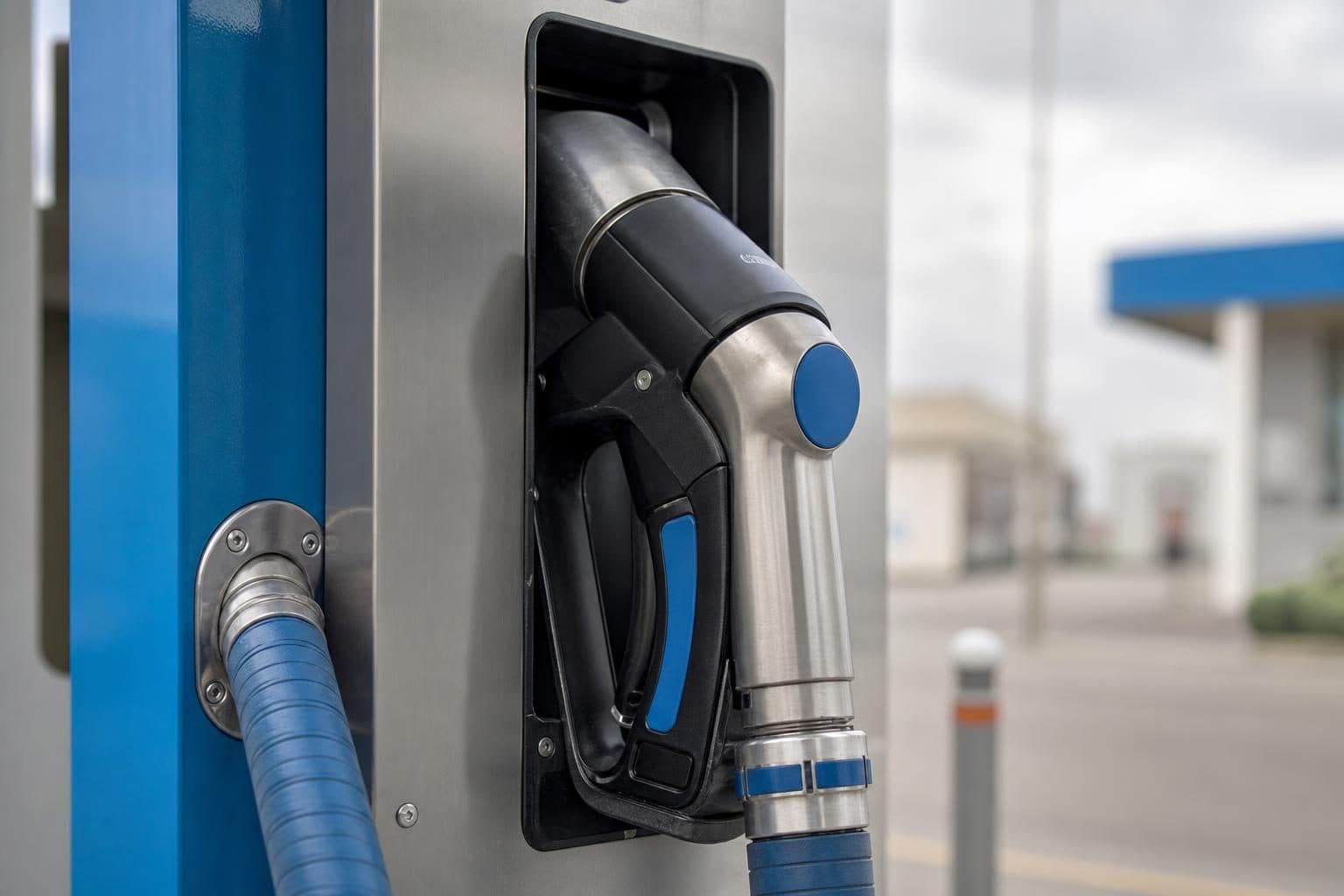
Fueling at 700 bar
Compressing gas quickly heats it. Without precautions a fast fill would push the gas inside a Type IV tank past the temperature its composite and liner are rated for. SAE J2601 sets the fueling protocol for light-duty vehicles: it defines pressure classes of 35 and 70 MPa, fuel delivery temperature categories of −40, −30 and −20 °C, and dispenser ratings T40, T30 and T20 to match. A T40 dispenser precools the gas to around −40 °C and, under reference conditions, can fill a car to 95–100 % state of charge in about three minutes. The DOE target for fill time is 3–5 minutes, in line with a gasoline stop.
If a station network serves only buses that refuel overnight, a slower, warmer fill avoids most of the precooling hardware. Fast public car fueling needs it.
Vehicle hydrogen storage tanks are certified under UN GTR No. 13 and, in Europe and many other markets, UN ECE R134; ISO 19881 covers the containers themselves. Each tank has a thermally activated pressure relief device that vents the contents in a fire before the composite can weaken.
What sits behind the dispenser
A car tank fills from a station tank, and the station needs more pressure than the car to push gas in. Stations hold their gas in cascade banks: several groups of cylinders rated above the vehicle's working pressure, drawn down in sequence so that the last part of the fill comes from the highest-pressure bank. A compressor tops the banks up between customers, and a chiller supplies the precooling that SAE J2601 calls for. On busy sites the bank size, not the dispenser, sets how many cars can fill back to back before waiting for the compressor.
Those banks are often Type I or Type II steel vessels, since weight on a concrete pad costs nothing. If a depot fills its own vehicles, the same logic applies at smaller scale: more buffer storage means a smaller compressor that can run through the night on cheaper electricity.
Liquid hydrogen at −253 °C
Hydrogen boils at −252.8 °C at ambient pressure. As a liquid it reaches about 70.8 kg/m³, almost double the density of 700 bar gas, and a road tanker of liquid can carry far more mass than a gaseous tube trailer. That is the main reason liquid hydrogen exists outside rocketry: it moves large quantities and fills large tanks.
The price is energy. The theoretical minimum to liquefy hydrogen from room temperature, including the conversion to para-hydrogen that keeps the liquid from reheating itself, is about 3.9 kWh/kg. Industrial liquefiers use roughly 10–20 kWh/kg, according to the DOE's program record on liquefaction costs. Against 33.3 kWh/kg of fuel, the DOE sums it up as more than 30 % of the hydrogen's energy content.
There is an oddity hidden in that para-hydrogen step. Hydrogen molecules come in two spin forms, ortho and para, and at room temperature the gas is about three parts ortho to one part para. At liquid temperatures the stable form is almost pure para, and the conversion from ortho to para releases heat, more than the heat needed to evaporate the same liquid. A tank filled with freshly condensed, unconverted liquid would therefore boil itself away over days even with perfect insulation. Liquefiers run the gas over catalysts such as iron oxide during cooling to finish the conversion before the liquid reaches the tank, and the cost of removing that heat at cryogenic temperature is part of why real plants sit so far above the thermodynamic minimum.
Then the tank starts to warm. No insulation is perfect, and heat that leaks in boils some liquid. That gas has to be vented, consumed or reliquefied to keep the pressure inside limits. Typical evaporation is around 1 % per day, much less in very large spherical tanks and more in small ones, because a small tank has more wall per liter. The DOE's onboard targets allow a maximum boil-off loss of 10 % over 30 days, and require at least 10 days of dormancy before the first release.
For a car parked at an airport for two weeks, that is the problem. For a tanker that unloads every day, it barely matters.
Cryo-compressed hydrogen
Cryo-compressed storage combines the two physical routes: hydrogen kept cold, often near liquid temperatures, inside an insulated pressure vessel rated up to about 350 bar. The pressure rating lets the tank hold its contents far longer before it must vent, and the cold raises density beyond what room-temperature gas allows. Lawrence Livermore National Laboratory drove a Toyota Prius fitted with a cryo-compressed tank more than 1,050 km (650 miles) on one fill, and it is the only approach that met the DOE's earlier 2015 gravimetric and volumetric targets together.
It has not reached production cars. The tank and dispenser hardware is more complex than either plain route, and fueling infrastructure has standardized on 350 and 700 bar gas.
Materials-based hydrogen storage methods
Materials-based storage binds hydrogen to something else, either on the surface of a porous solid, inside a metal lattice, or in a chemical bond. The appeal is density at modest pressure. The drawback is always the host: it adds weight, and getting the hydrogen back out takes heat, a catalyst, or both.
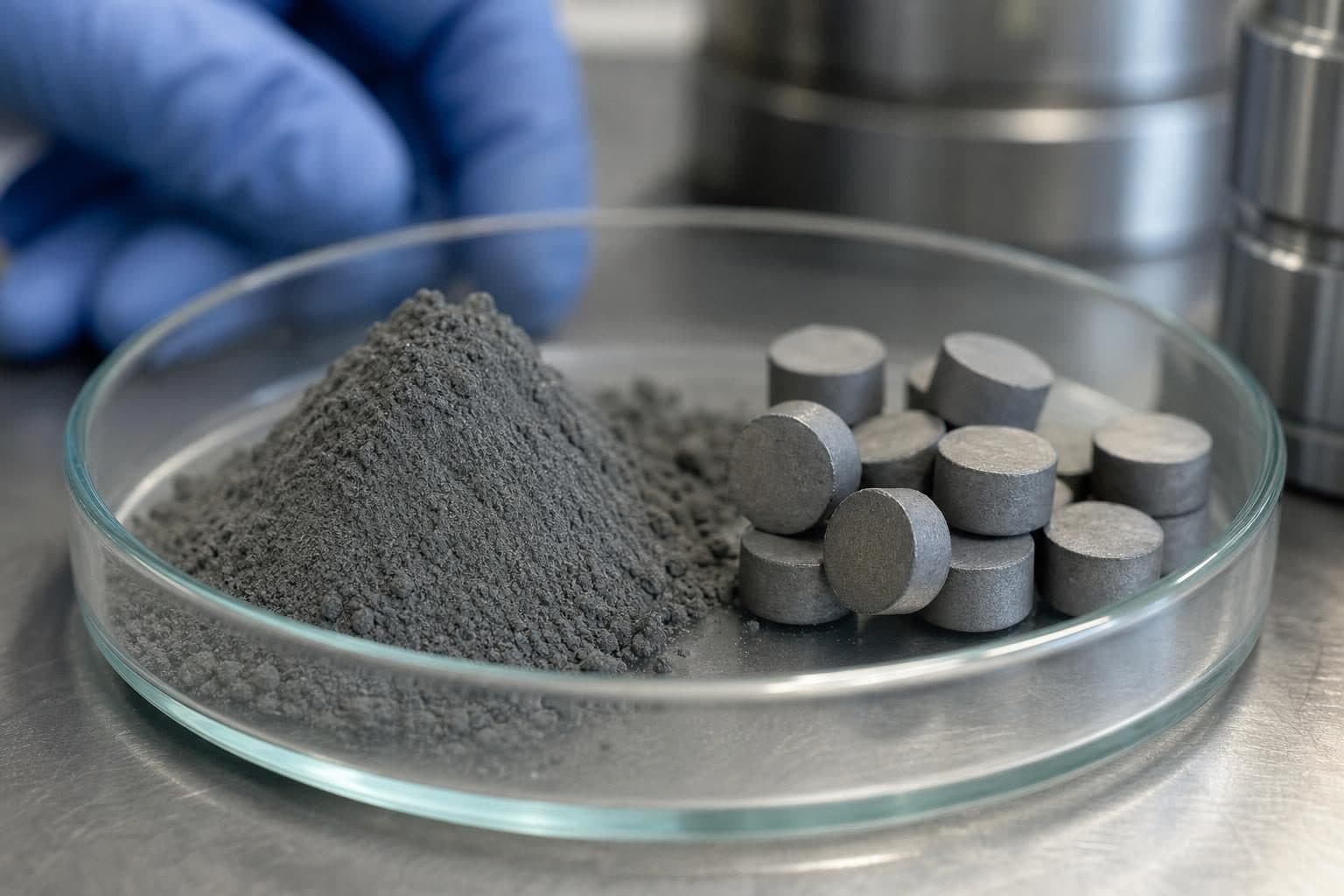
Metal hydrides
Some metals and alloys absorb hydrogen into their crystal structure and release it when warmed or when pressure drops. LaNi₅ works near room temperature at a few bar but holds only about 1.5 % hydrogen by weight. Magnesium hydride holds 7.6 % but needs around 300 °C to release it. Sodium alanate (NaAlH₄) sits in between at 5.6 % theoretical. Hydrides earn their place where weight is no penalty or is even useful, as in forklifts that need counterweight anyway, or in the German Type 212 submarines, which store fuel cell hydrogen in hydride cylinders low in the hull. The details are on the page on metal hydrides and MOFs.
Chemical hydrides, LOHC and ammonia
Liquid organic hydrogen carriers (LOHC) are oils that take up hydrogen in a catalytic reactor and give it back in another. Dibenzyltoluene carries about 6.2 % hydrogen by weight; toluene and methylcyclohexane about 6 %. The liquid can travel in ordinary tank trucks and ships at ambient conditions, which is the whole point. Releasing the hydrogen takes heat on the order of a quarter of the hydrogen's own lower heating value, plus a purification step for fuel cell quality.
Ammonia is the heavyweight carrier: 17.8 % hydrogen by mass, liquid at −33 °C at atmospheric pressure or at around 9 bar at room temperature, and already shipped worldwide by the fertilizer industry. Liquid ammonia holds about 121 kg of hydrogen per cubic meter, more than liquid hydrogen itself. Cracking it back to hydrogen and nitrogen costs energy and leaves traces of ammonia that a fuel cell cannot tolerate, so many proposals burn or use the ammonia directly. Ammonia borane, a solid chemical hydride, reaches about 12 % hydrogen by weight but releases it irreversibly at roughly 100–150 °C, so the spent material has to be regenerated off board.
Adsorbents and MOFs
Porous materials such as activated carbons and metal-organic frameworks hold hydrogen as a dense layer on their internal surfaces. At room temperature the attraction is too weak to matter. At 77 K, the temperature of liquid nitrogen, it becomes useful: carefully prepared MOF-5 reached 7.1 % excess hydrogen by weight at 77 K and 40 bar in a 2007 study, and newer frameworks such as NU-1501-Al report higher figures. The cryogenic requirement keeps adsorbents in the lab for now. The same physics, at room temperature and with methane, is the basis of adsorbed natural gas, where the molecule is bigger and sticks far better.
Large-scale storage: caverns, trailers and pipes
Vehicle tanks hold kilograms. Grid and industrial storage holds thousands of tonnes, and only geology does that cheaply.
Salt caverns are solution-mined voids in thick salt deposits, sealed by the salt itself. Hydrogen has been stored this way on the Texas Gulf Coast for decades: the Chevron Phillips Clemens Terminal cavern, about 300 m (1,000 ft) tall and 49 m (160 ft) across, holds roughly 2,520 tonnes of hydrogen. The ACES Delta project in Utah adds two caverns of about 150 GWh each, fed by 220 MW of electrolyzers producing about 100 tonnes of hydrogen per day. Depleted gas fields and aquifers are being studied as well, with open questions about microbial consumption of hydrogen and gas purity.
Between storage sites and users, hydrogen moves three ways:
- Tube trailers: long steel or composite cylinders on a chassis, filled at 180 bar or more. They suit small and medium deliveries.
- Liquid tankers: insulated trailers that carry several times the mass of a gas trailer, at the cost of liquefaction.
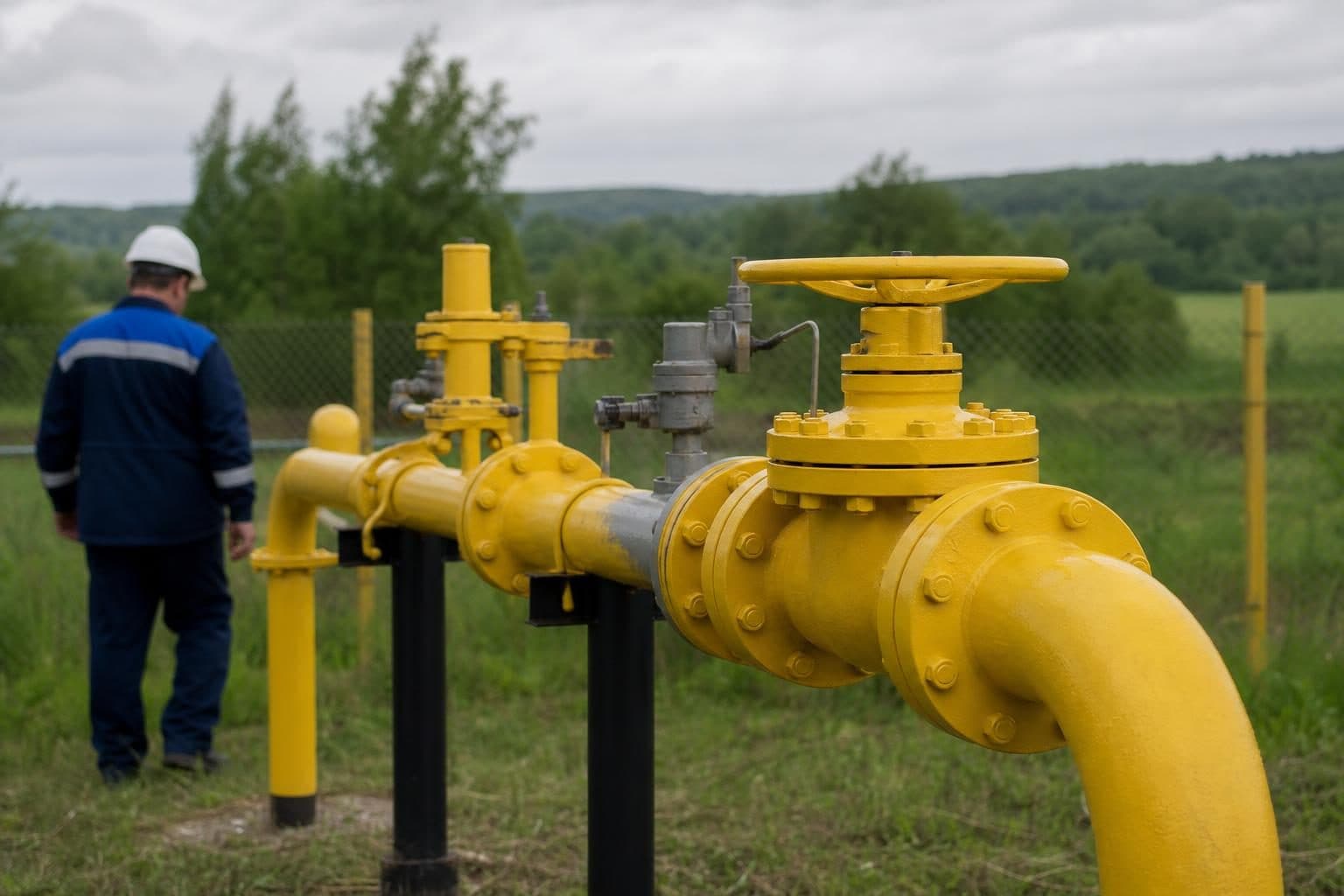
- Pipelines: about 1,600 miles in the United States, owned by merchant producers and clustered along the Gulf Coast near refineries and chemical plants. Hydrogen piping is designed to ASME B31.12, and embrittlement of steel and welds is the main technical concern.
This is the same problem natural gas solved with virtual pipelines of trucked cylinders long before hydrogen had a market. Blending hydrogen into existing gas grids is a separate route with its own limits, covered on the page on hydrogen blending.
DOE onboard storage targets
The DOE's targets for light-duty vehicle storage are the most widely quoted yardstick for hydrogen storage technology and challenges, because they translate "good enough" into system-level numbers. They apply to the complete system, including tank, valves, regulators and any cooling or heating hardware, and they must be met at end of service life.
| Target | 2025 | Ultimate |
|---|---|---|
| Gravimetric capacity | 1.8 kWh/kg (0.055 kg H₂/kg system) | 2.2 kWh/kg (0.065 kg H₂/kg system) |
| Volumetric capacity | 1.3 kWh/L (0.040 kg H₂/L system) | 1.7 kWh/L (0.050 kg H₂/L system) |
| System cost | $9/kWh ($300/kg H₂) | $8/kWh ($266/kg H₂) |
| Fill time | 3–5 min | 3–5 min |
| Cycle life (¼ to full) | 1,500 cycles | 1,500 cycles |
| Maximum boil-off after 30 days | 10 % | 10 % |
Compare the volumetric target with the density table at the top of the page. Hydrogen gas at 700 bar holds about 1.3 kWh/L before any tank wall is counted, so a 700 bar system cannot reach 1.3 kWh/L, let alone 1.7. That arithmetic is the main reason the DOE keeps funding materials and cold storage research while every car on the road uses compressed gas.
Safety: embrittlement, leaks and flammability
Hydrogen burns in air at concentrations from about 4 % to 75 % by volume, a far wider range than methane's roughly 5–15 %, and it can detonate between about 18 % and 59 %. Its minimum ignition energy is about 0.02 mJ, around a tenth of what gasoline vapor needs. Its flame is hard to see in daylight, so stations and garages use UV/IR flame detectors.
On the other side of the ledger, hydrogen is so light and diffuses so fast that a leak outdoors rises and thins out quickly. Indoors the gas collects under roofs, so ventilation at the ceiling and detectors there matter more than at floor level, the opposite of propane. Small leaks are also more common: the molecule passes through fittings and seals that hold methane. Hydrogen can support a flame from a leak as small as about 4 micrograms per second.
Embrittlement is the materials problem. Atomic hydrogen diffuses into high-strength steels and welds and lowers their toughness. Vehicle tanks therefore use polymer or aluminum liners, and pipelines for pure hydrogen are built from specific steel grades run at lower stresses. Some materials also turn brittle at liquid hydrogen temperatures, so cryogenic tanks use austenitic stainless steels and aluminum alloys.
US installations follow NFPA 2, the Hydrogen Technologies Code, which sets separation distances, ventilation and storage limits. For anyone weighing how to store hydrogen gas at home, that code and local permitting are the starting point: a meaningful household quantity of hydrogen is a permitted installation, not a garage project.
A practical guide to choosing a storage route
The right method follows from three questions: how much hydrogen, how long it sits, and whether the container moves.
For a car or a van, compressed gas at 700 bar is the only route with a fueling network. For buses, trucks and forklifts that return to a depot, 350 bar banks are cheaper and simpler, and space is less of a constraint. If a fleet uses several hundred kilograms a day, liquid delivery to the depot starts to beat tube trailers, even with the liquefaction penalty. Hydrides make sense where weight helps or safety at low pressure outweighs everything else, as in submarines and some forklifts. Long-distance shipping across oceans is where ammonia and LOHC compete with liquid hydrogen. Seasonal or grid-scale storage of thousands of tonnes belongs in salt caverns, where the geology allows it.
The comparison with methane runs through all of this, since natural gas went through the same choices between compressed, liquefied and adsorbed storage decades earlier. The differences in density, flame behavior and materials are set out on the page on hydrogen vs natural gas, and the general methane picture on natural gas storage. When hydrogen storage tanks are sized against a daily demand, the arithmetic is the same as for methane cylinders in the tank capacity calculator, only with a much lower density: at 700 bar, every kilogram of hydrogen needs about 25 liters of internal tank volume.