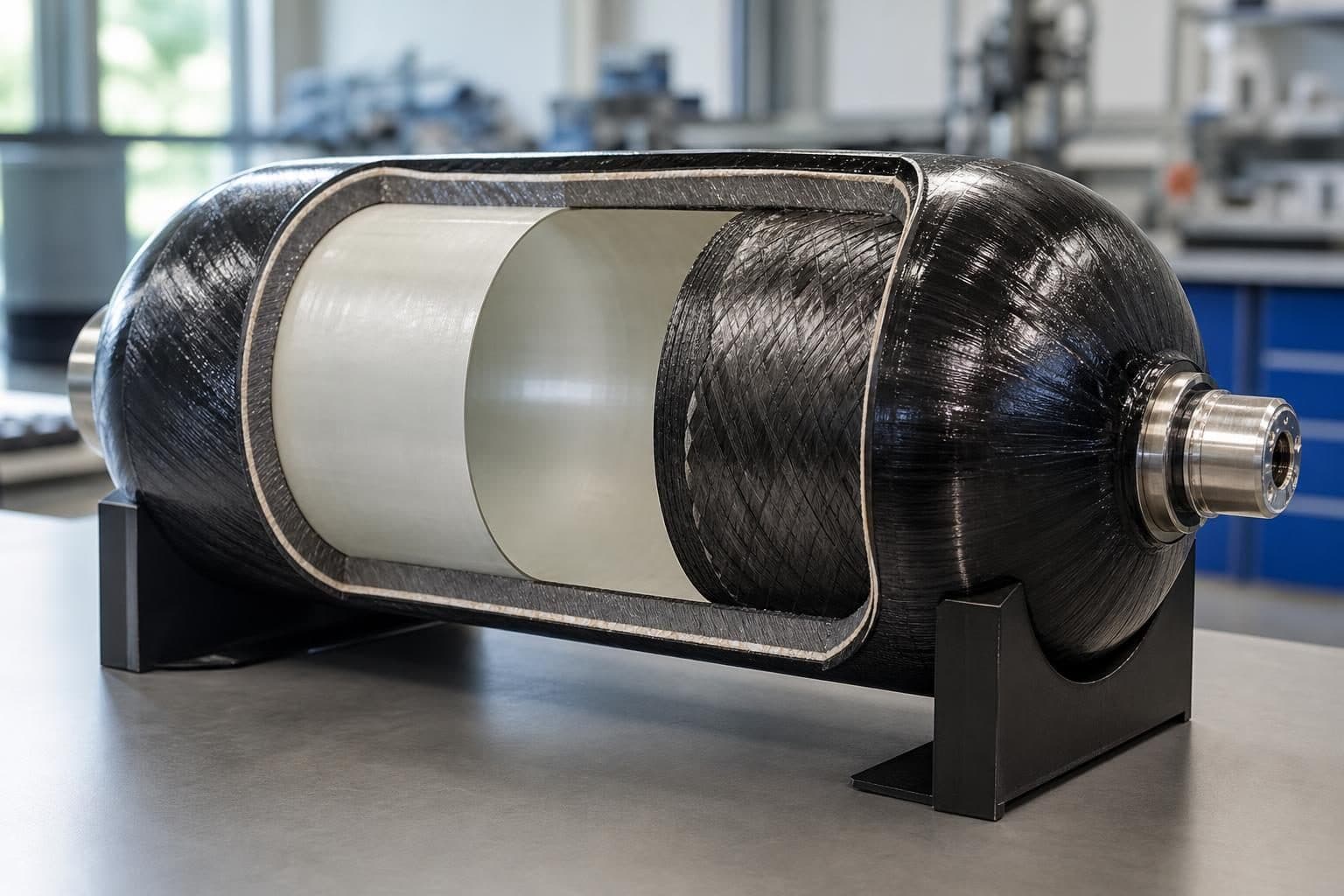
Fill an 80-liter cylinder with methane at 200 bar and it holds about 13–14 kg, roughly 680 MJ of fuel. Fill the same cylinder with hydrogen at 700 bar, three and a half times the pressure, and it holds about 3.2 kg, or roughly 380 MJ. The hydrogen version needs a carbon fiber tank to survive the pressure and still carries a little more than half the energy. That pair of numbers is a fair summary of how the two gases compare.
Per kilogram, per cubic meter, per liter
The headline figure for hydrogen is its energy per kilogram. On a lower heating value basis it delivers about 120 MJ/kg, against 50 MJ/kg for pure methane and about 47 MJ/kg for typical US pipeline natural gas, which carries some ethane, nitrogen and carbon dioxide. By weight, hydrogen wins by a factor of about 2.4.
By volume the picture flips. Hydrogen weighs 0.090 kg/m³ at 0 °C and 1 bar; methane weighs 0.716 kg/m³. Multiply density by heating value and a cubic meter of hydrogen carries 10.8 MJ, a cubic meter of methane 35.8 MJ. Per normal cubic meter, methane holds about 3.3 times the energy.
| Property (LHV basis) | Hydrogen | Methane | US natural gas |
|---|---|---|---|
| Density at 0 °C, 1 bar | 0.090 kg/m³ | 0.716 kg/m³ | 0.777 kg/m³ |
| Energy per kg | 120.0 MJ | 50.0 MJ | 47.1 MJ |
| Energy per m³ | 10.8 MJ | 35.8 MJ | 36.6 MJ |
| Higher heating value per m³ | 12.7 MJ | 39.8 MJ | 40.6 MJ |
| Boiling point at 1 atm | −252.8 °C | −161.5 °C | about −162 °C |
Per liter of stored fuel is the number that decides tank size. Liquid hydrogen at about 71 kg/m³ holds roughly 8.5 MJ per liter; liquefied natural gas holds more than twice that. Compressed hydrogen at 700 bar sits near 40 kg/m³, or about 4.8 MJ/L. Methane at 200–250 bar, the range of compressed natural gas, stores around 8–9 MJ/L at a third of the pressure. Hydrogen tanks are therefore bigger, heavier per unit of energy, and built for harsher conditions.
Combustion and flame behavior
Both gases burn to water vapor; methane also produces carbon dioxide, one molecule per molecule of fuel. That is the climate case for hydrogen. The flame itself is where the engineering differs.
| Combustion property | Hydrogen | Methane |
|---|---|---|
| Flammable range in air | about 4–75 % | about 5–15 % |
| Minimum ignition energy | about 0.02 mJ | about 0.29 mJ |
| Laminar burning velocity | about 2.6–3.1 m/s | about 0.4 m/s |
| Autoignition temperature | about 585 °C | about 540 °C |
The laminar burning velocity is roughly seven times higher for hydrogen. A burner designed for methane relies on the flame front staying where the gas exits; with a fuel whose flame moves that much faster, the flame can travel back into the burner, a failure called flashback. Gas turbines meet the same problem in their premixed low-NOx combustors, and turbine makers redesign the fuel nozzles before a machine runs on high hydrogen fractions.
Hydrogen flames are also hot and nearly invisible in daylight. With no carbon there is no glowing soot, and most of the radiation lies in the ultraviolet. Facilities use UV/IR flame detectors, and a clear hydrogen fire is something responders are trained to look for with thermal cameras, not their eyes.
Hydrogen burns hot enough to raise NOx emissions in air, even without any carbon in the fuel. That surprises people the first time.
Leaks and dispersion
Hydrogen molecules are tiny and the gas is very light. Two practical consequences follow. It leaks through openings and seals that hold methane, and once out it rises and mixes quickly. Through the same small hole at the same pressure, the volumetric leak rate of hydrogen is close to three times that of methane, roughly the square root of their density ratio. Because each cubic meter of hydrogen carries about a third of the energy, the energy leaking out is of the same order for both gases. The difference lies in how easily the escaping gas ignites.
Hydrogen can sustain a flame from a leak as small as about 4 micrograms per second. Outdoors, buoyancy usually wins and the plume dilutes below 4 % within a short distance. Indoors, both gases rise, but hydrogen faster, and it pools under ceilings and in roof pockets. Garages and workshops for hydrogen vehicles therefore place sensors and ventilation openings at the highest point, and they also have to account for the fact that hydrogen, unlike natural gas, carries no odorant: sulfur odorants poison fuel cell catalysts, so hydrogen for vehicles is supplied unodorized.
If a workshop already handles natural gas vehicles, its ventilation is a starting point, though the gas detection and the electrical classification still need a review for hydrogen.
Embrittlement and materials
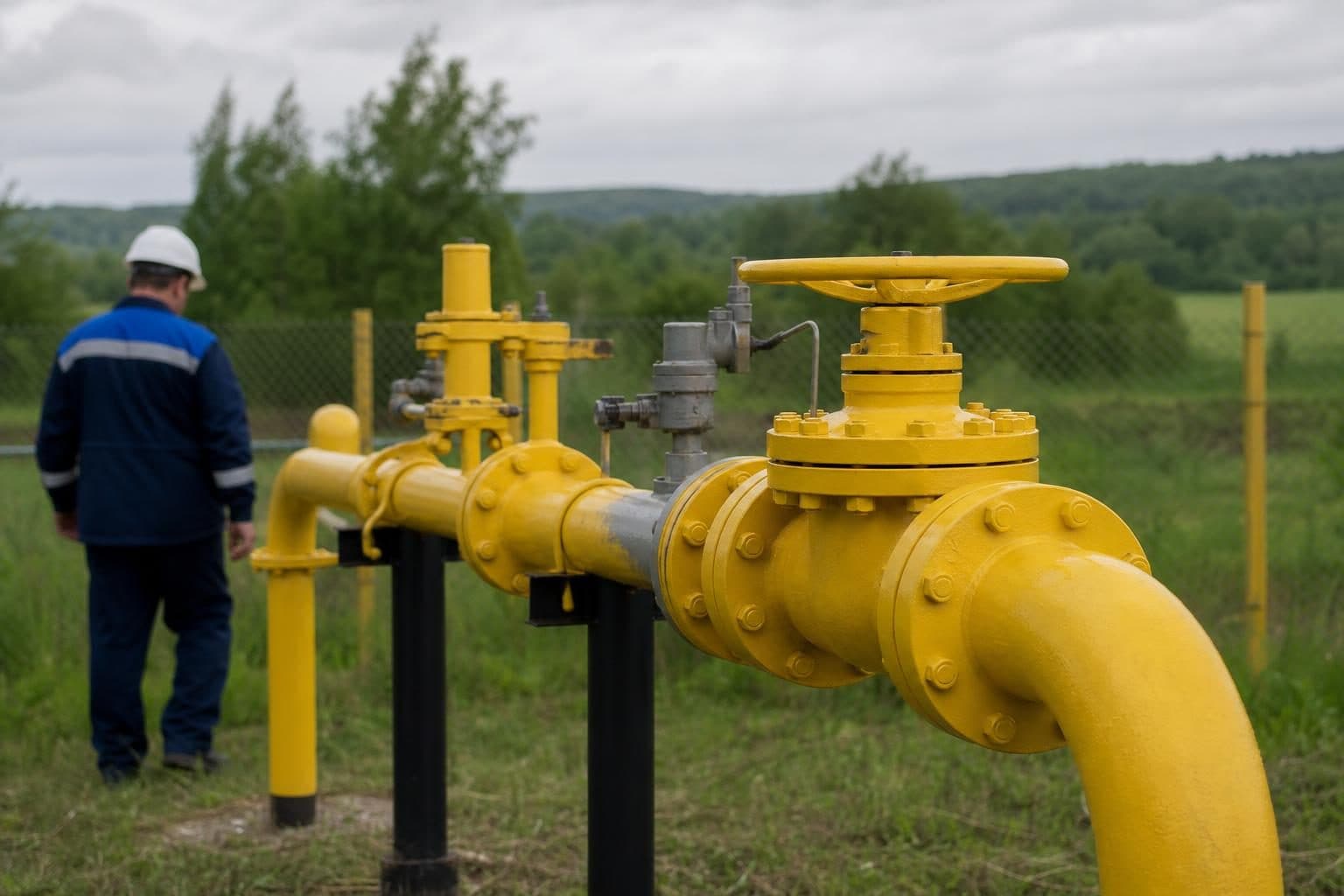
Natural gas does little to steel. Hydrogen is different: atomic hydrogen diffuses into the metal, especially into high-strength steels and weld zones, and lowers ductility and fatigue resistance. The DOE lists the potential for hydrogen to embrittle the steel and welds used in pipelines as one of the key technical concerns for hydrogen delivery.
The practical rules of thumb are about strength and stress. Lower-strength pipeline steels tolerate hydrogen better than high-strength grades, and pipelines in hydrogen service run at lower stress relative to their rating. Hydrogen piping in the United States is designed to ASME B31.12. In vehicle tanks the problem is avoided altogether: Type III and Type IV hydrogen cylinders put an aluminum or polymer liner in contact with the gas and let carbon fiber carry the load.
Natural gas tanks follow a separate standard, ISO 11439, and many of them use steel. A CNG tank cannot simply be refilled with hydrogen: its pressure rating, its steel and its certification were all set for methane.
What changes in storage and pipes
Switching a system from methane to hydrogen touches almost every component, and the tank is only the most visible one.
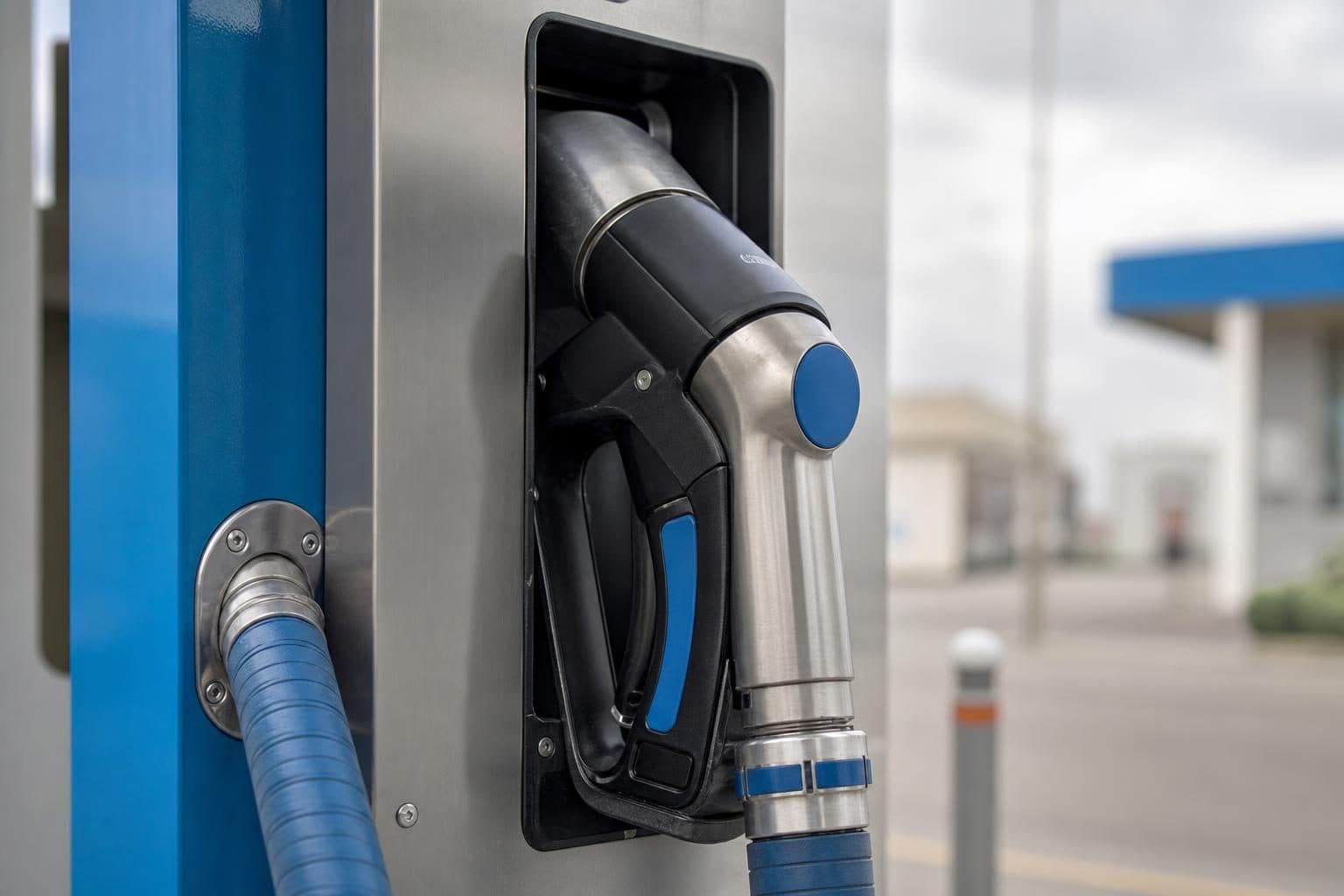
Storage pressure goes up or temperature goes down. To approach the energy per liter that methane reaches at 200–250 bar, hydrogen needs about 700 bar; as a liquid it needs −253 °C, against −162 °C for LNG. The cryogenic gap is wider than the 91 degrees suggest, since every degree closer to absolute zero costs more work to remove, and boil-off from a liquid hydrogen tank runs well above that of an LNG tank of the same size.
Compression changes character. A centrifugal compressor sized for methane moves far less energy when it is fed hydrogen, because the light gas gains much less pressure per stage at the same tip speed. Hydrogen pipelines and stations therefore use more stages or reciprocating and diaphragm machines.
Seals, fittings and meters need attention. Elastomers and threaded joints that are tight for methane may weep hydrogen, and a volumetric gas meter reads a higher flow for the same delivered energy, so billing has to be based on measured energy content. Burners, finally, need new nozzles once the hydrogen share is high enough for flame speed and flashback to matter.
A worked example puts the pipeline side in numbers. A distribution main that delivers 1,000 normal cubic meters of methane per hour supplies about 39.8 GJ of energy on a higher heating value basis. Delivering the same energy as pure hydrogen takes about 3,130 normal cubic meters per hour, more than three times the volume. Because hydrogen is so much lighter, the pressure drop for that larger flow is lower than the volume ratio suggests, and a low-pressure main can carry a similar amount of energy. The compressors and the meters are the parts that cannot follow without changes.
The Wobbe index, the number gas engineers use to judge whether two gases are interchangeable at a burner, explains why low blends work at all. On a higher heating value basis, hydrogen's Wobbe index is about 48 MJ/m³ and methane's about 53 MJ/m³. They are closer than the heating values suggest, because hydrogen's low density lets more of it flow through the same orifice. A burner set for natural gas sees a modest drop in heat input when some hydrogen is mixed in, which is what makes hydrogen blending feasible at a few tens of percent.
Where each makes sense
Natural gas remains the cheaper fuel to store and move per unit of energy, and the infrastructure already exists, from natural gas storage in depleted fields to LNG ships. Where carbon emissions are not the deciding factor, it wins on cost almost everywhere.
Hydrogen makes sense where its zero-carbon combustion or its use in fuel cells pays for the storage penalty: refineries and ammonia plants that already consume it, steelmaking by direct reduction, heavy vehicles on fixed routes with depot fueling, and seasonal storage of surplus renewable electricity in salt caverns. For heating homes, independent reviews have mostly found that heat pumps make better use of renewable electricity than hydrogen boilers, since electrolysis, transport and combustion each lose energy along the way.
The two also meet in renewable natural gas, which offers a low-carbon methane that fits existing pipes; its production paths are set out on the page on renewable natural gas. For hydrogen's own tank options, the hydrogen storage page compares compressed, liquid and materials-based routes with their densities.