On a closed section of a municipal landfill, a grid of wells sunk into the waste pulls out a steady flow of gas that smells faintly of rotten eggs. About half of it is methane. The rest is mostly carbon dioxide, with water vapor, hydrogen sulfide, siloxanes from shampoos and cosmetics, and a little air drawn in through the cover. For decades the usual fate of that gas was a flare or a small engine making electricity on site. Cleaned to pipeline quality, it becomes renewable natural gas, and it can run the same trucks, buses and boilers as gas from a shale well.
Where the gas comes from
Biogas forms wherever bacteria break down organic matter without oxygen. Four sources dominate in the United States.
Landfills are the largest. The Alternative Fuels Data Center notes that landfills are the third-largest source of human-related methane emissions in the country, and that 532 landfill gas projects were operating as of July 2023, most of them generating electricity. The gas comes up through extraction wells whether or not anyone uses it, so a project turns an emission into a fuel.
Livestock farms feed manure into anaerobic digesters, sealed tanks or covered lagoons that capture the gas. About 470 commercial farm digesters were running in 2023, mostly for electricity, with a growing share upgrading their gas for vehicle use.
Wastewater treatment plants digest sewage sludge. Of more than 16,000 US plants, only about 1,200 have anaerobic digesters, and about 860 use the biogas on site.
Food and organic waste from manufacturers, restaurants, supermarkets and hospitals goes to standalone digesters or is co-digested with sludge or manure.
EPA's Landfill Methane Outreach Program counted 135 agricultural and 102 landfill projects producing RNG, as opposed to electricity, in 2023. Farms passed landfills in project count, though a single large landfill can produce far more gas than a dairy.
Upgrading biogas
Raw biogas contains 45–65% methane, depending on the feedstock. Burning it in a boiler or a lean-burn generator needs only light cleanup. Injecting it into a gas pipeline or a vehicle tank requires upgrading to 90% methane or more, and pipeline operators typically ask for 96–98%.
Upgrading removes four groups of components:
- water, which would condense and corrode equipment
- carbon dioxide, which dilutes the heating value
- hydrogen sulfide, siloxanes and volatile organic compounds, which corrode engines and foul catalysts
- nitrogen and oxygen, mainly from air drawn into landfill wells
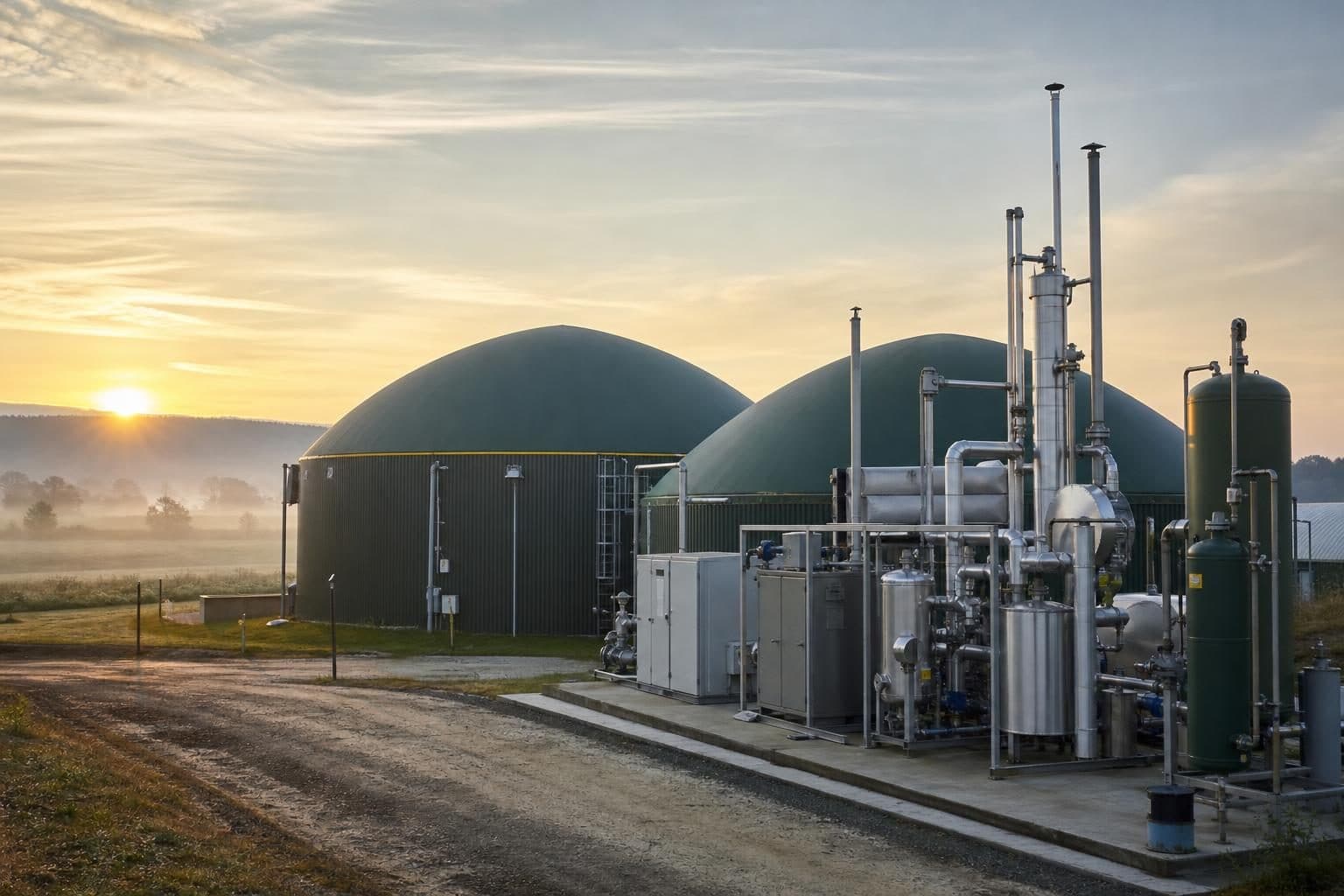
Plants use a handful of proven methods: water scrubbing, which dissolves carbon dioxide under pressure; pressure swing adsorption on carbon molecular sieves or zeolites; membrane separation; and amine scrubbing. Landfill gas is usually the hardest to clean because of its nitrogen and oxygen content, which most of these methods do not remove easily. Manure and wastewater gas has less air in it but more hydrogen sulfide.
After upgrading, the gas is compressed, odorized if the pipeline requires it, metered for quality and either injected into a utility line or sent to a dedicated station.
Pipeline injection and vehicle use
The AFDC describes RNG as pipeline-quality gas that is fully interchangeable with conventional natural gas. Two delivery routes follow from that.
Most RNG is injected into the common pipeline network. A fleet in Texas can then buy RNG produced at a dairy in Wisconsin, take ordinary gas from its local line, and claim the renewable attributes through contracts that track the volumes. EPA's Renewable Fuel Standard requires that use as a transportation fuel be documented through written contracts, or signed affidavits where contracts are unavailable.
Some projects skip the grid. A landfill can fuel its own haul trucks, or a city can run refuse trucks on gas from its wastewater plant, through a station built next to the upgrading unit. The gas can also be liquefied for LNG trucks, with exactly the same equipment used for fossil LNG.
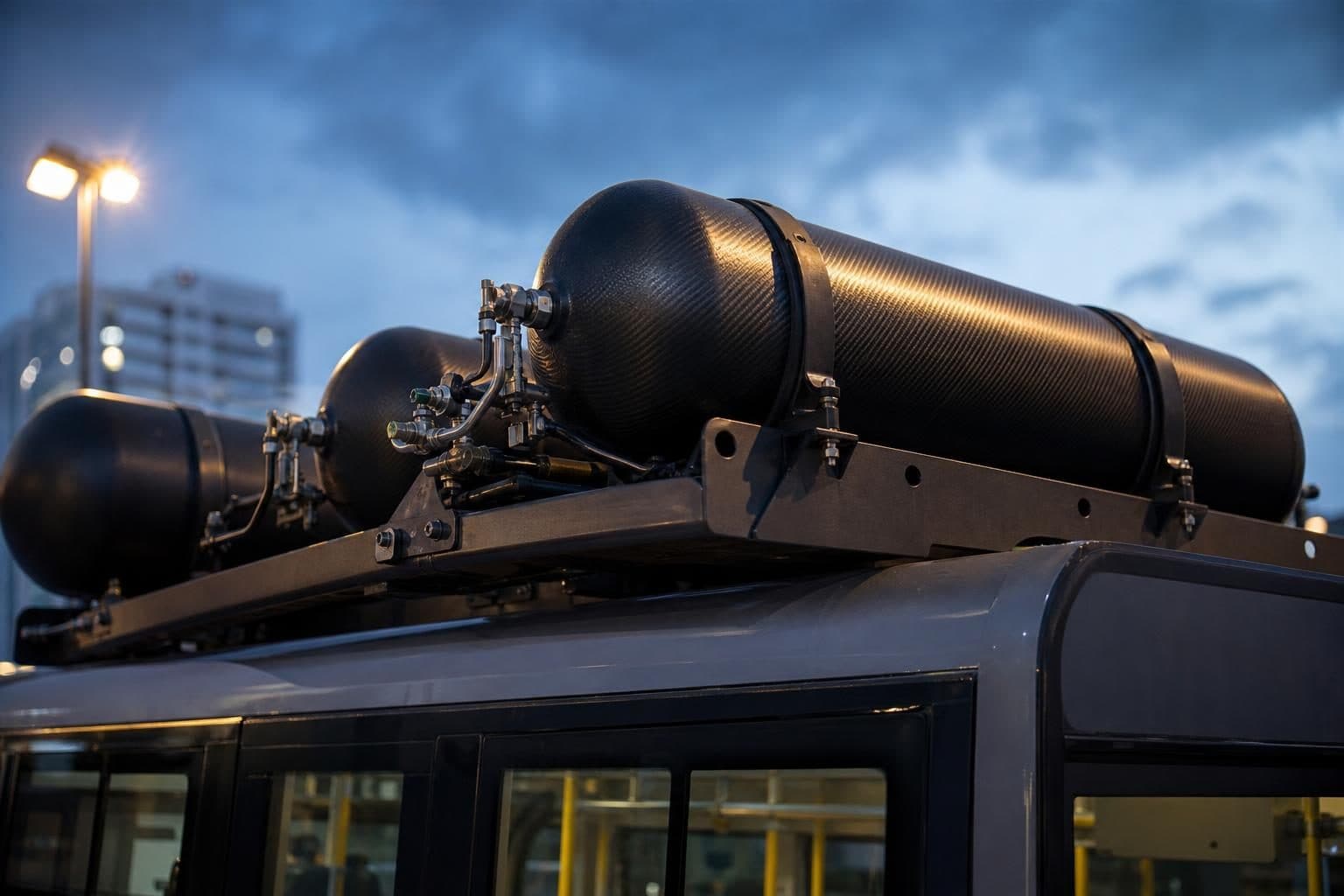
Storage is identical. An upgraded biomethane molecule goes into a Type IV cylinder at 3,600 psi, a cryogenic tank at −162 °C or an adsorbed natural gas tank under the same rules and with the same capacity as fossil methane. The guides to natural gas storage tanks and CNG vs LNG apply unchanged.
Carbon intensity and the credit programs
What separates RNG from fossil gas is not its chemistry but its accounting. Two programs drive most of the value in the United States.
The federal Renewable Fuel Standard
Under EPA's Renewable Fuel Standard, every qualifying unit of renewable fuel generates a Renewable Identification Number, or RIN. For biogas, 77,000 Btu counts as one gallon equivalent and one RIN. Since EPA's 2014 Pathways II rule, renewable CNG and LNG made from biogas from landfills, municipal wastewater treatment digesters, agricultural digesters and separated municipal solid waste digesters qualify for D3 cellulosic RINs, the most valuable category. Biogas from other waste digesters earns D5 advanced RINs. In recent years RNG has supplied most of the cellulosic RINs generated under the program.
A worked example shows the scale. One gasoline gallon equivalent of CNG is 5.66 lb of gas, and at 20,160 Btu per pound that is about 114,100 Btu. Divided by 77,000, each GGE generates about 1.48 RINs. A refuse truck burning 30 GGE a day on landfill RNG accounts for roughly 44 D3 RINs a day, or about 11,500 over a 260-day working year. RIN prices move with policy and supply, so the dollar value behind that count is far less stable than the count itself.
California's Low Carbon Fuel Standard
California's Low Carbon Fuel Standard, approved in 2009 and in force since January 1, 2011, scores every transportation fuel by its life-cycle carbon intensity (CI) in grams of CO₂-equivalent per megajoule. Fuels below the annual benchmark earn credits, and fuels above it generate deficits that must be covered by buying credits.
The scoring includes what happens without the project. Manure stored in open lagoons releases methane; a digester captures and burns it. Because the avoided methane counts in the fuel's favor, dairy RNG can score below zero. In 2017 California Air Resources Board staff estimated that qualifying manure-to-RNG pathways could earn CI scores between −100 and −400 gCO₂e/MJ. Landfill RNG does not receive the same avoided-methane credit, because many landfills are already required to collect and control their gas, so the project changes less.
These negative scores are also the most disputed part of the system. Critics argue that crediting avoided lagoon emissions rewards large confined herds and that the counterfactual is uncertain. If a fleet's sustainability report leans on a negative CI number, it is worth knowing which pathway and which baseline produced it.
Running a fleet on RNG
For a fleet manager, switching to RNG rarely involves the vehicles at all. The trucks, cylinders and stations stay the same; what changes is the supply contract. Most deals take one of three forms: a fuel supplier delivers RNG through the pipeline and sells it at the pump with the credits already priced in, a fleet signs a long-term offtake agreement with a specific project, or a public agency builds its own supply from a landfill or treatment plant it already operates.
The questions worth asking are about paperwork more than hardware. Which project produced the gas, which RIN category and LCFS pathway it was registered under, who keeps the credit revenue, and whether the same environmental attributes could be sold twice, once to the fleet and once to a utility customer. If a depot fuels heavy trucks, the volumes are large enough that these terms move the effective fuel price more than the commodity gas price does.
On the road, nothing changes. Range, refueling time, engine maintenance and cylinder inspection intervals are those of any natural gas vehicle, and long-haul operators can run liquefied RNG through the same supply chain as fossil LNG, covered in LNG trucking.
What RNG can and cannot do
RNG cuts life-cycle emissions sharply for the fleets that use it and turns waste methane into a fuel. It does not change the tailpipe: a truck burning RNG emits the same carbon dioxide and nitrogen oxides per mile as one burning fossil gas, and the climate benefit lies upstream. Supply is also limited. The feedstocks are tied to landfills, farms and treatment plants, and the total resource covers only a fraction of current US gas demand, so most analyses see RNG concentrated in transport, where credit programs pay the most per unit.
Leakage applies to RNG as much as to fossil gas. A digester or upgrading plant that leaks methane loses part of the benefit it was built to earn, so leak monitoring at these sites matters as much as at a compressor station. The is natural gas clean guide looks at methane leakage across the whole gas system.