A 1-kilogram puff of methane burned in a boiler releases 2.74 kg of carbon dioxide. The same kilogram leaked from a valve before it reaches the boiler warms the climate, over a century, about as much as 30 kg of carbon dioxide would. That pair of numbers is the whole argument over whether natural gas is clean, compressed into two lines. One side quotes the first number, the other side quotes the second, and both are correct.
Is natural gas clean, then? At the burner, cleaner than any other fossil fuel. Across the chain from well to burner, it depends on how much of it escapes along the way, and the measured answer for the United States is more than the industry once assumed.
Combustion emissions: why it is called the cleanest fossil fuel
Natural gas is mostly methane, CH₄: one carbon atom carrying four hydrogen atoms. No other hydrocarbon has a higher ratio of hydrogen to carbon. When it burns, a larger share of the energy comes from turning hydrogen into water, and a smaller share from turning carbon into carbon dioxide. Coal, at the other end, is mostly carbon.
The US Energy Information Administration publishes emission factors for each fuel, and they show the gap plainly.
| Fuel | lb CO₂ per million Btu | kg CO₂ per million Btu | Compared with natural gas |
|---|---|---|---|
| Natural gas | 116.65 | 52.91 | baseline |
| Propane | 138.63 | 62.88 | +19% |
| Motor gasoline | 155.77 | 70.66 | +34% |
| Diesel and heating oil | 163.45 | 74.14 | +40% |
| Bituminous coal | 205.57 | 93.24 | +76% |
| Subbituminous coal | 214.13 | 97.13 | +84% |
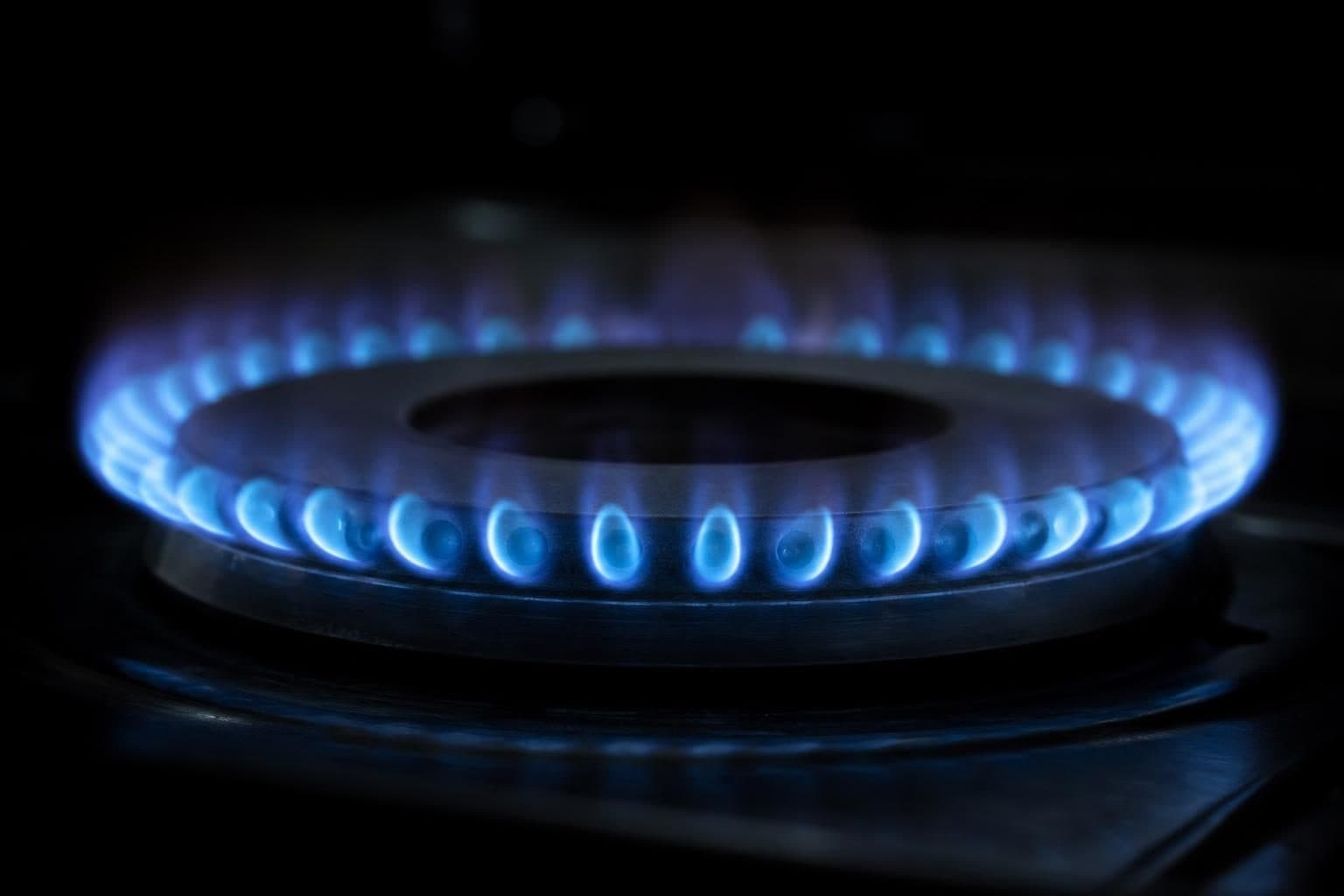
Read the other way, natural gas emits about 43% less carbon dioxide than bituminous coal per unit of heat, and about 29% less than diesel. This is the basis for calling it the cleanest fossil fuel, and as a statement about combustion it holds up. Coal, oil and their products all sit higher on the table, and no fossil fuel in common use beats methane on carbon per unit of heat, so the label cleanest fossil fuel is accurate at the flame.
Carbon dioxide is not the only output. The EIA notes that burning natural gas produces fewer emissions of nearly all types of air pollutants than coal or petroleum products. Pipeline gas contains almost no sulfur beyond the trace odorant, so sulfur dioxide is negligible, and a gas flame produces very little soot. That is where the reputation began, long before climate entered the debate, when coal smoke was the main urban air problem. Nitrogen oxides still form, because any hot flame in air makes them, and modern gas engines need catalysts or careful combustion control to keep NOx down.
Methane leakage and its climate effect
The weak point is what happens before the gas is burned. Methane escapes from wells, processing plants, compressor stations, pipelines, storage tanks and the meters and appliances at the end of the line. Some of it is deliberate venting, some is equipment leakage, and a large share comes from a small number of sites with abnormal problems: a stuck valve, a tank hatch left open, a failed flare.
The best-known measurement-based estimate is a 2018 study in Science by Ramón Alvarez and colleagues. Combining facility-level measurements, checked against aircraft surveys covering about 30% of US production, they put 2015 emissions from the US oil and gas supply chain at about 13 million tonnes of methane a year. That equals 2.3% of gross US gas production and was about 60% higher than the EPA inventory at the time, mostly because inventories missed emissions from abnormal operating conditions.
Why 2.3% matters becomes clear with the global warming potential. Under the IPCC's Sixth Assessment Report, fossil methane has a 100-year global warming potential of 29.8: one tonne warms the climate over a century as much as 29.8 tonnes of carbon dioxide. Over 20 years the factor is much larger, because methane does most of its warming in its first decade or two.
A worked example
Take 1 kg of methane delivered to a customer and burned. Combustion releases 2.74 kg of CO₂. At a 2.3% loss rate, producing that kilogram meant losing about 0.024 kg along the way. Multiply by 29.8 and the leak is worth about 0.70 kg of CO₂-equivalent, adding roughly a quarter to the climate cost of the gas on a 100-year basis. On a 20-year basis the Alvarez team found that the leaked methane produces radiative forcing comparable to the CO₂ from burning the gas, which roughly doubles its near-term footprint.
Against coal, gas still usually comes out ahead, because coal starts with 76% more CO₂ at the stack and coal mines leak methane too. The margin shrinks as leakage rises, though, and against renewable electricity the comparison is not close. For a utility, a city or a fleet weighing is natural gas clean enough to choose on climate grounds, the leak rate of its actual supply chain deserves as much attention as the tailpipe or stack figures.
Is natural gas clean in vehicles?
For transport, the picture is similar but more mixed. A natural gas engine produces less CO₂ per unit of energy than a diesel, but spark-ignited gas engines are usually somewhat less efficient than diesels, which eats into that advantage. Some unburned methane also escapes through the exhaust, called methane slip, and through crankcase venting and fueling.
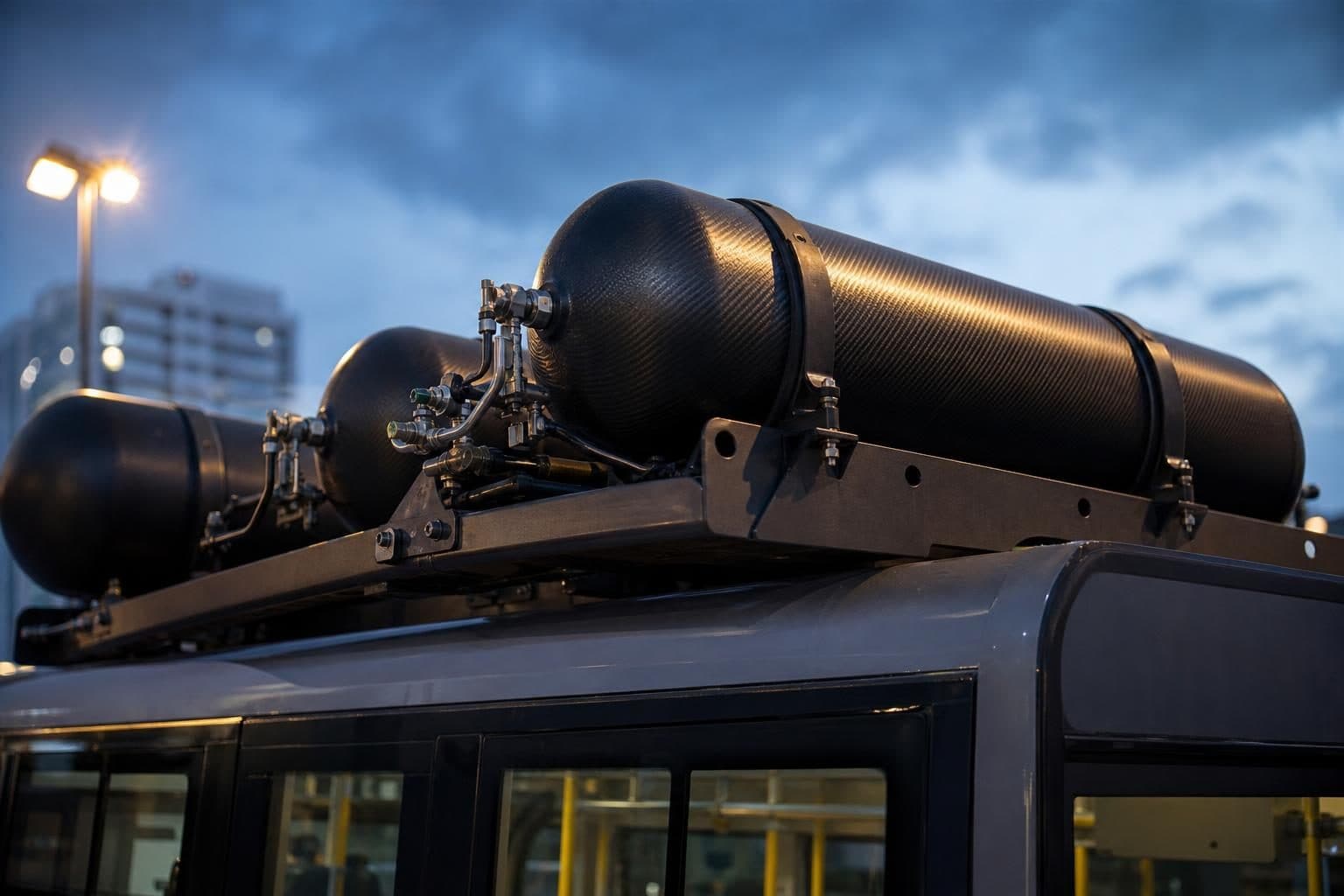
Where natural gas vehicles have shown clear benefits is on local air quality. Buses and refuse trucks that run on CNG produce very little particulate matter, and transit agencies in cities with severe smog were among the first to adopt them. The bigger climate gain comes when the fuel is renewable natural gas from landfills or digesters, which can turn the life-cycle balance strongly in its favor. The natural gas vehicles guide covers engines and fleets in more detail.
Is natural gas lighter than air?
Yes, and it is one of the most useful physical facts about the fuel. What makes natural gas lighter than air is the small size of its main molecule: methane has a molar mass of 16 g/mol, against an average of about 29 g/mol for air. NIST data put methane at about 0.68 kg per cubic meter at 15 °C and atmospheric pressure, and about 0.72 kg/m³ at 0 °C. Air at sea level and 15 °C weighs about 1.225 kg/m³. Pipeline gas, with a few percent of ethane and nitrogen mixed in, has a relative density of roughly 0.6, which makes natural gas lighter than air by about 40%.
Propane goes the other way. With a molar mass of 44 g/mol, its vapor is about 1.5 times as dense as air, roughly 1.87 kg/m³ at 15 °C. Butane is heavier still. This is a practical difference, not a textbook one: leaked propane flows downhill and settles in basements, pits, drains and boat bilges, where it can wait for an ignition source.
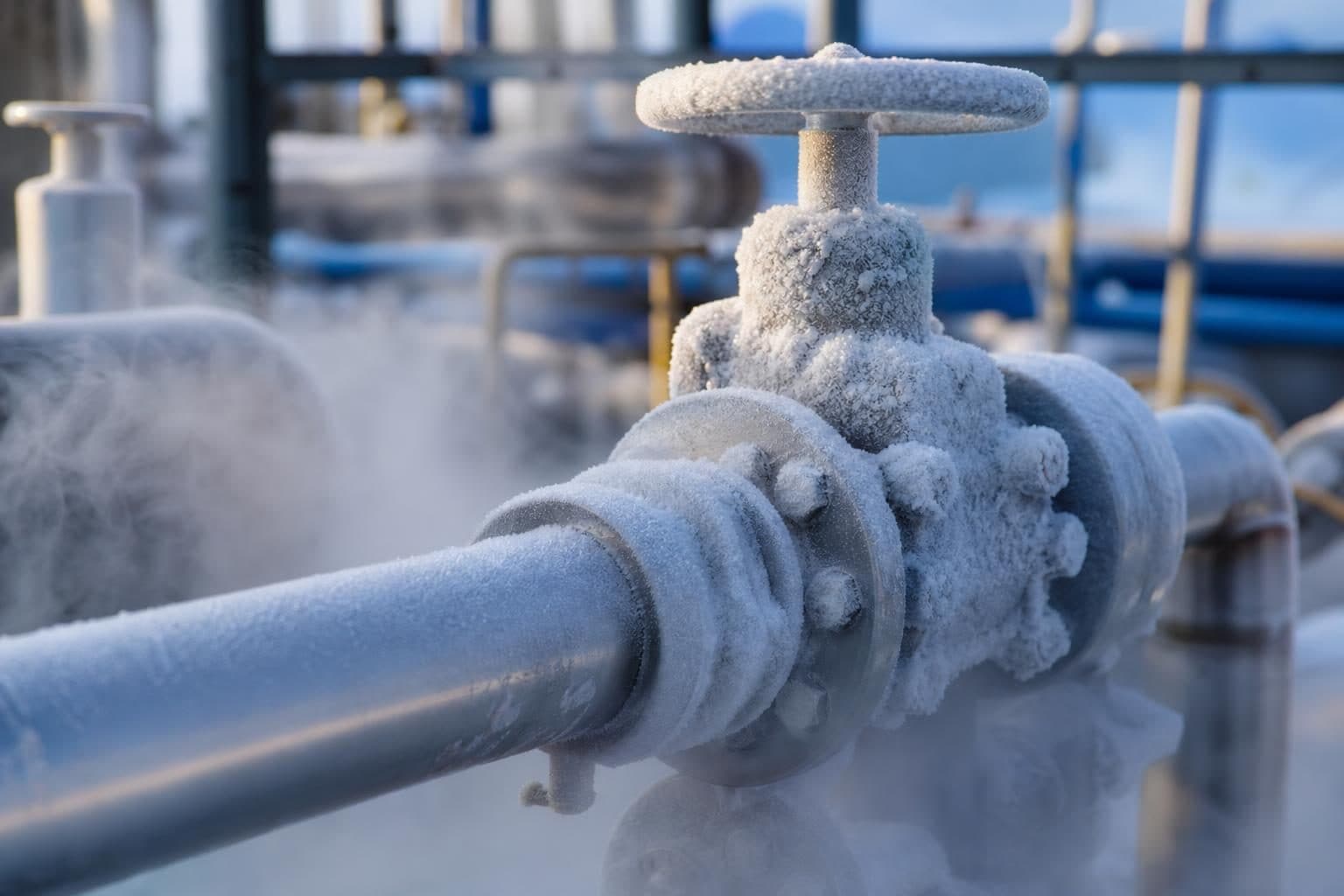
There is one exception. Cold methane vapor from an LNG spill is denser than air until it warms, so it hugs the ground for a while before it rises.
What being lighter than air means for safety
Because natural gas is lighter than air, a leak outdoors rises and dilutes quickly. Methane burns only between about 5% and 15% in air, so once it has mixed past the lower limit it can no longer ignite. That is why CNG vehicles are generally allowed in open parking and why gas releases from vehicle relief devices are piped upward.
Indoors, buoyancy changes where the danger sits. Gas collects near the ceiling, so garages that maintain natural gas vehicles place ventilation and methane detectors high on the walls and keep heaters and open flames away from the roof space. In a home, the odorant matters more than the density: natural gas has no smell of its own, and utilities add a mercaptan so that a leak is obvious long before it reaches the flammable range.
Why it suits vehicles and storage
The same physics that sets natural gas apart from propane also defines how it can be stored. Methane cannot be liquefied by pressure at room temperature, so it has to be compressed to 200–250 bar, cooled to about −162 °C or held on an adsorbent. Each route has its own tanks, standards and trade-offs, covered in the guides to natural gas storage tanks, CNG vs LNG and adsorbed natural gas.
What makes the effort worthwhile is a combination: a fuel that is abundant, delivered by pipeline to most cities in the developed world, cheaper per unit of energy than diesel in many markets, and cleaner at the point of use than any liquid fossil fuel. The AFDC puts one gasoline gallon equivalent at 5.66 lb of compressed gas, and at that ratio a city bus carries its day's fuel in a few hundred kilograms of methane on the roof.
One last detail for anyone who asks is natural gas clean about a specific project: the 2.3% figure is a national average for one year, and individual basins and operators sit well above and below it. At the national scale, the EPA estimates that methane from natural gas and petroleum systems and abandoned wells made up about 33% of total US methane emissions in 2021.