From dispenser to engine
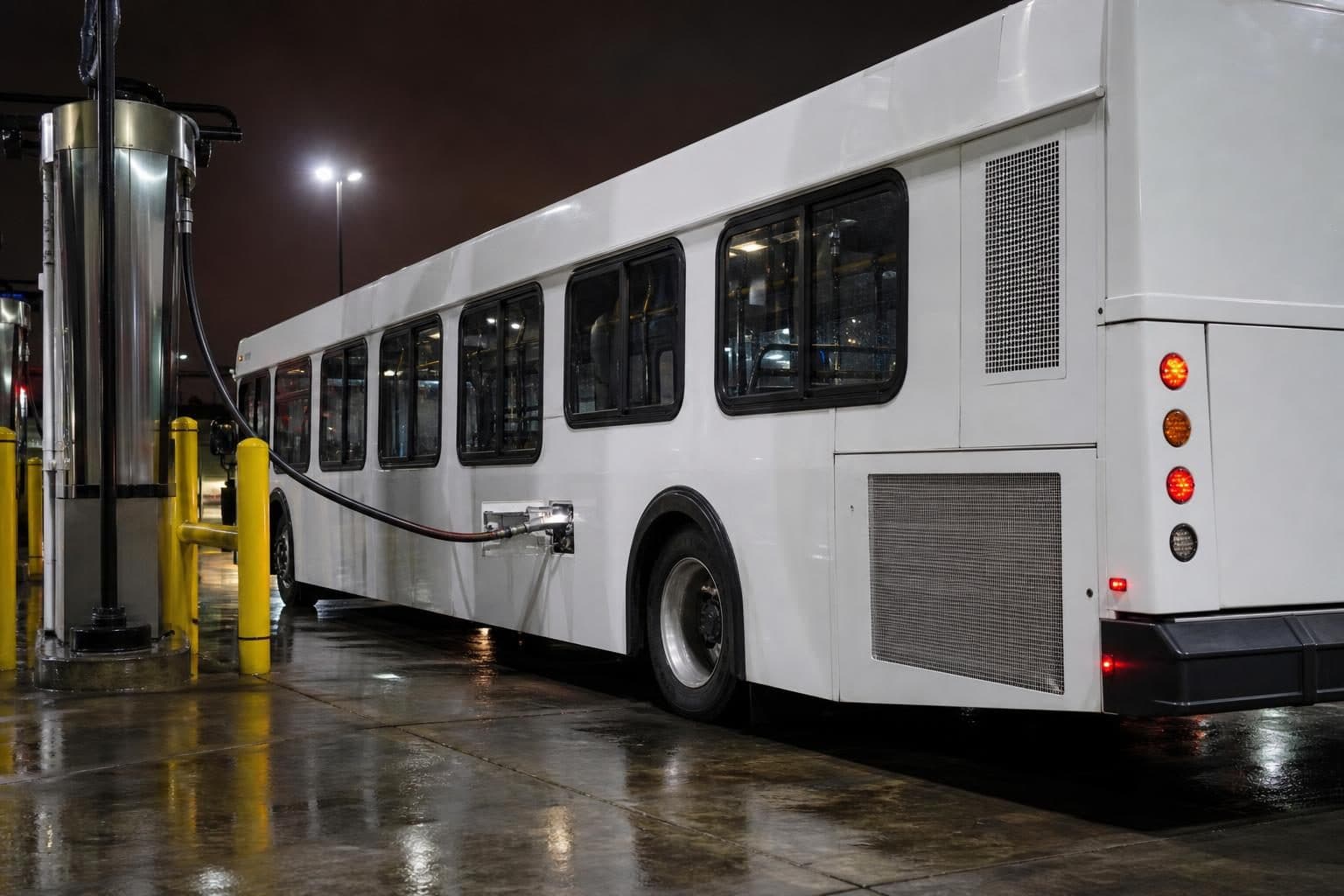
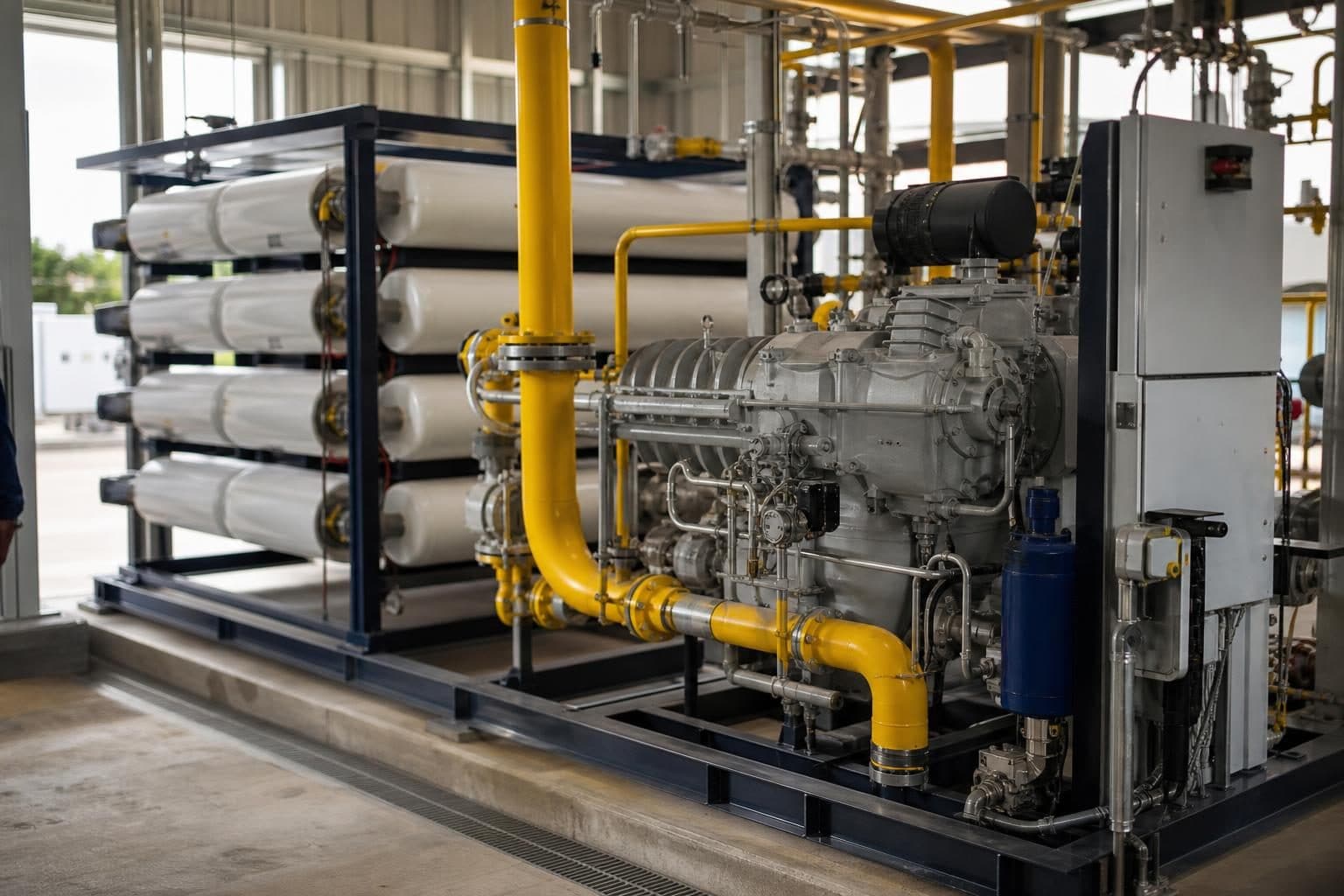
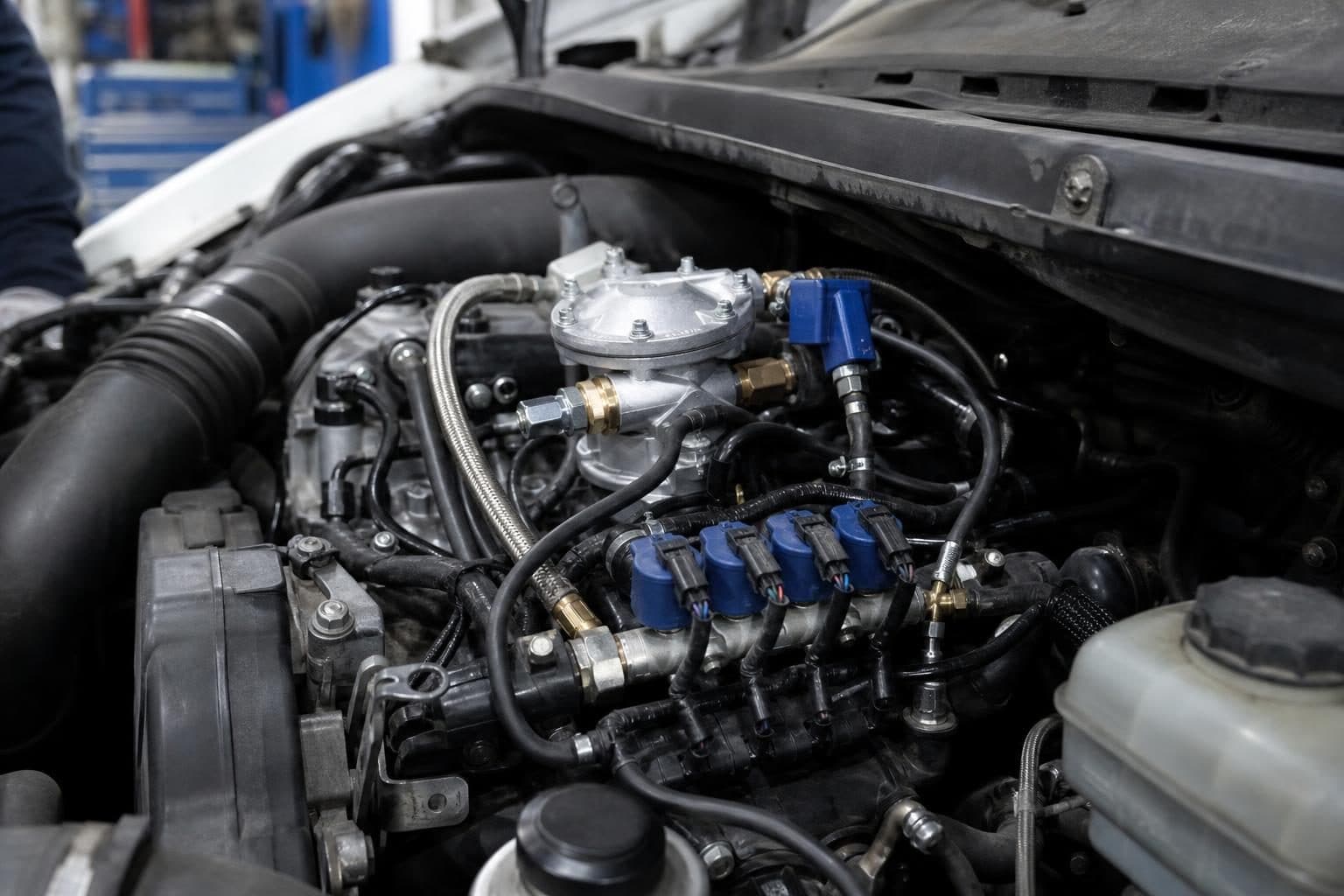
A compressed natural gas vehicle carries its fuel at up to about 250 bar in one or more cylinders, drops it to a few bar in a regulator and burns it in a spark-ignition engine. Most of what makes these vehicles different sits in that short chain, and in the station that fills them. A fast-fill dispenser can fill a car in a few minutes from high-pressure storage; a time-fill post lets a depot fill a whole fleet slowly overnight from a compressor.
Guides in this section
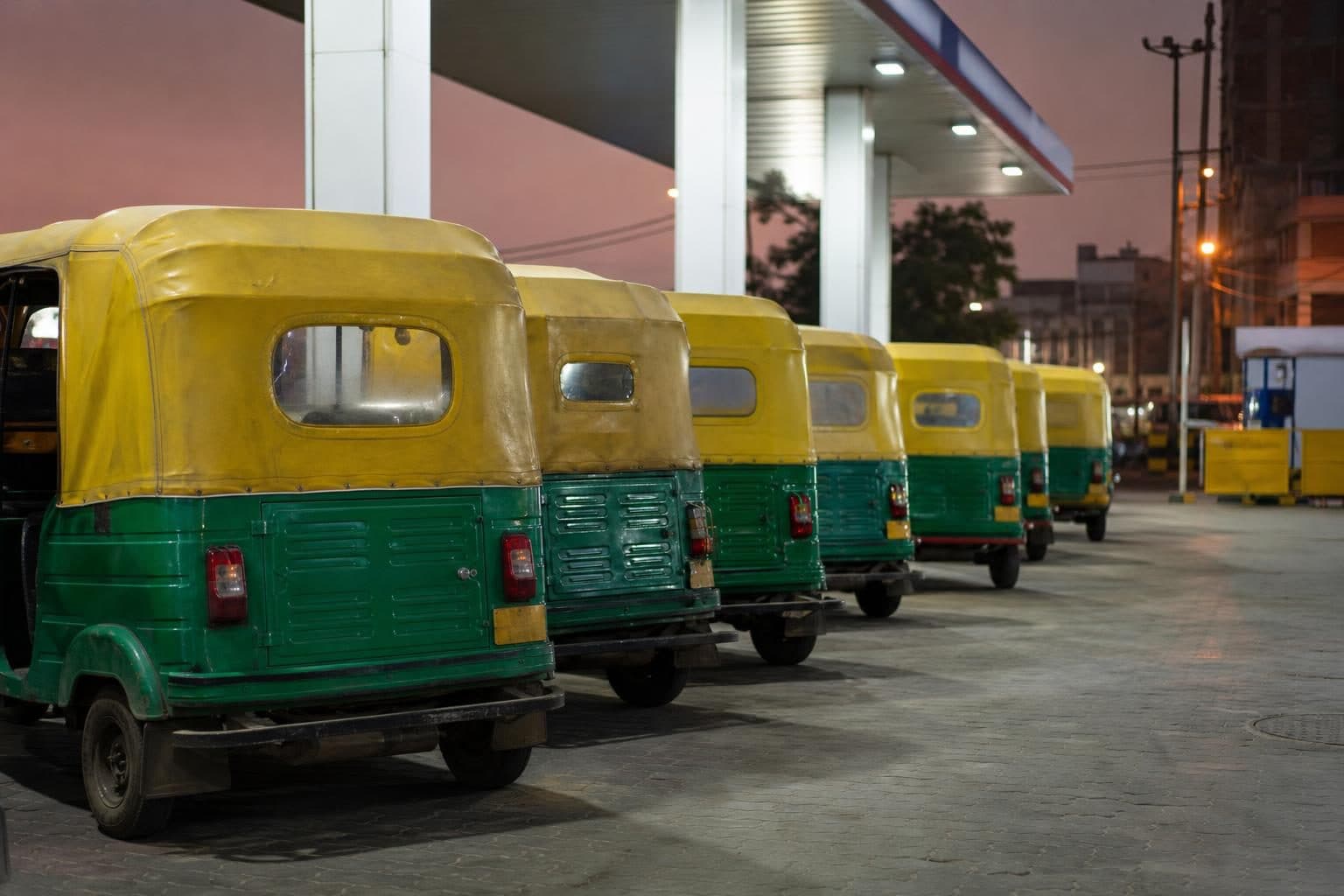
What is CNG covers the fuel itself, the gasoline and diesel gallon equivalents used to price it and the fleets that run on it. CNG fueling stations walks through compressors, dryers, storage cascades and dispensers. NGV conversion explains what a conversion kit contains and how certification works, and two- and three-wheelers looks at the small vehicles where gas made the largest difference to urban air.
To size a cylinder for a given range, the tank capacity calculator converts water volume and pressure into kilograms and gasoline gallon equivalents.
What a gas vehicle carries
One gasoline gallon equivalent of CNG is 2.567 kilograms of gas. At 250 bar and 15 °C that mass fills about 13 liters of cylinder, against 3.8 liters for the gallon of gasoline it replaces, so a compact car using about 4 kg of gas per 100 kilometers needs roughly 80 liters of cylinder at 250 bar for a 400-kilometer range, several times the space of a gasoline tank. Buses and refuse trucks solve the space problem on the roof or behind the cab, which is why they were among the first fleets to switch.
Cylinders on vehicles follow strict rules. In the United States, light-duty tanks are inspected every 36 months or 36,000 miles and after any fire or crash, and every cylinder carries a fixed end-of-life date on its label, typically 15 to 20 years after manufacture. Pressure relief devices vent the gas in a fire before heat can weaken the vessel.
Conversions are the other path into gas. A kit adds a regulator, injectors, an electronic control unit and the cylinders, and in the United States it has to be certified for the specific engine family. The details are in the NGV conversion guide.
Choosing between fast-fill and time-fill
The station design follows the way the vehicles are used. Taxis, delivery vans and private cars arrive one at a time and need to leave quickly, so public stations keep gas in high-pressure storage banks and fill from them in a cascade. Buses and refuse trucks return to the same depot every night, and a slow fill directly from the compressor uses smaller equipment and fills the cylinders more completely, because the gas heats less during a slow fill. The fueling station guide describes both layouts.