Almost 30 percent. That is roughly how much of the gasoline and oil fed into a carbureted two-stroke tricycle engine leaves through the exhaust port without ever burning, according to field studies of Philippine tricycles. Multiply that by hundreds of thousands of small engines idling in city traffic and the blue haze over Manila, Dhaka or Delhi in the 1990s needs no further explanation.
Natural gas offered a fix for part of that problem, and one city showed how fast it could work. Getting the same fuel onto motorcycles took another quarter of a century.
Why two-strokes were the target
A two-stroke engine has no separate intake and exhaust strokes. Fresh mixture enters the cylinder while the burnt gas is still leaving it, and some of the fresh charge short-circuits straight out through the exhaust port. In a carbureted engine that fresh charge already contains fuel and lubricating oil, so every short-circuit loss is raw hydrocarbon in the street. The same Philippine study found hydrocarbon emissions from two-stroke tricycles nearly 50 times those of a car, and regulators there tightened hydrocarbon limits from 10,000 ppm to 6,000 ppm.
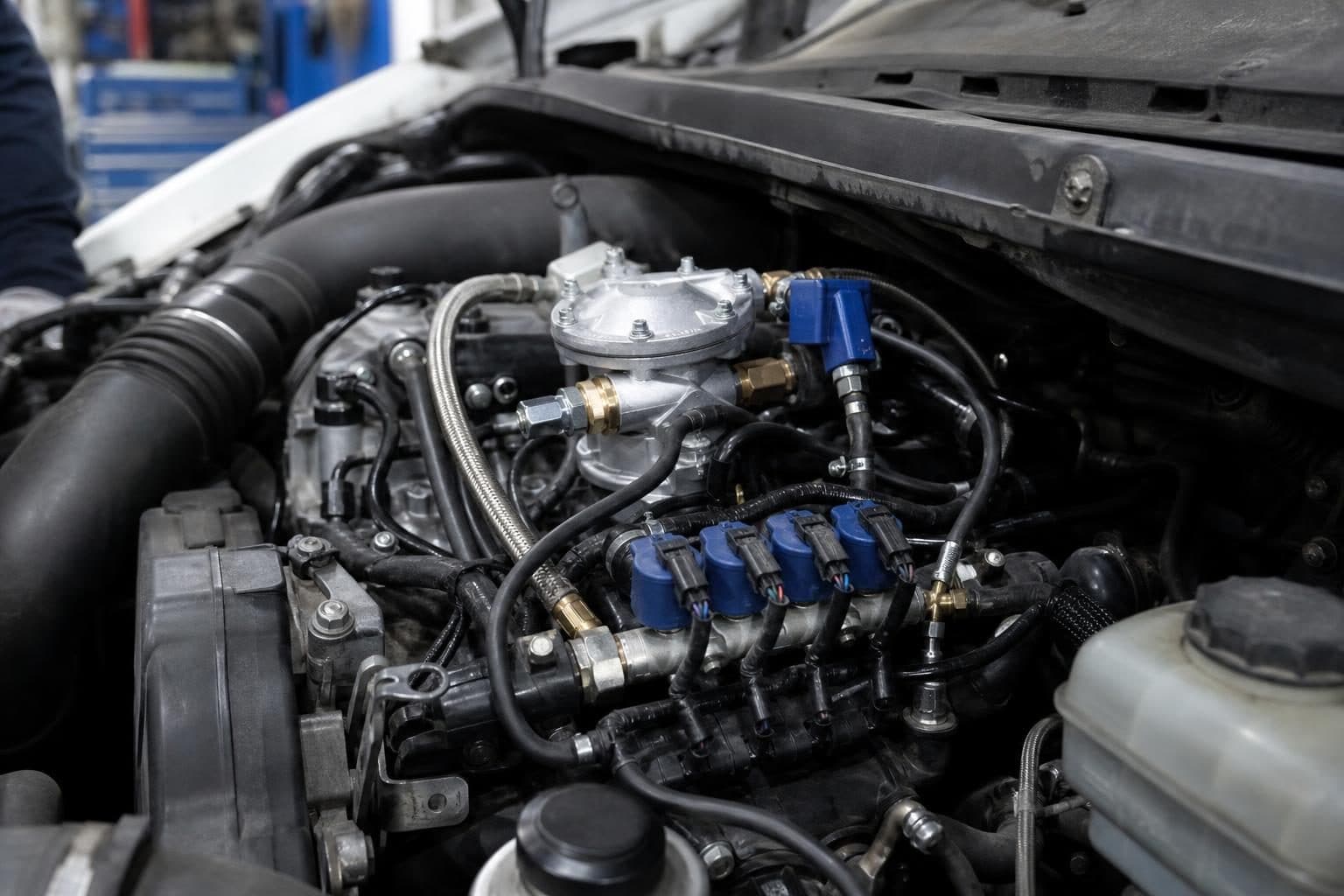
Converting such an engine to gas helps in two ways. Gas mixes completely with air, so there is no liquid fuel film to wash oil off the cylinder walls or leave unburned droplets, and the fuel that does escape is mostly methane instead of the reactive aromatics in gasoline. Smoke from the lubricating oil remains, so the largest gains came when gas was paired with cleaner four-stroke engines.
Direct injection was the other route. The Philippine study found direct-injection retrofits of two-strokes gave the largest cut in hydrocarbons and carbon monoxide, without changing fuel at all.
Delhi: the auto-rickshaw conversion
In July 1998, in the long-running M.C. Mehta case, India's Supreme Court ordered Delhi's public transport onto clean fuel. Buses, taxis and auto-rickshaws were given deadlines that were extended several times, into early 2002, as the gas supply and station network struggled to keep up.
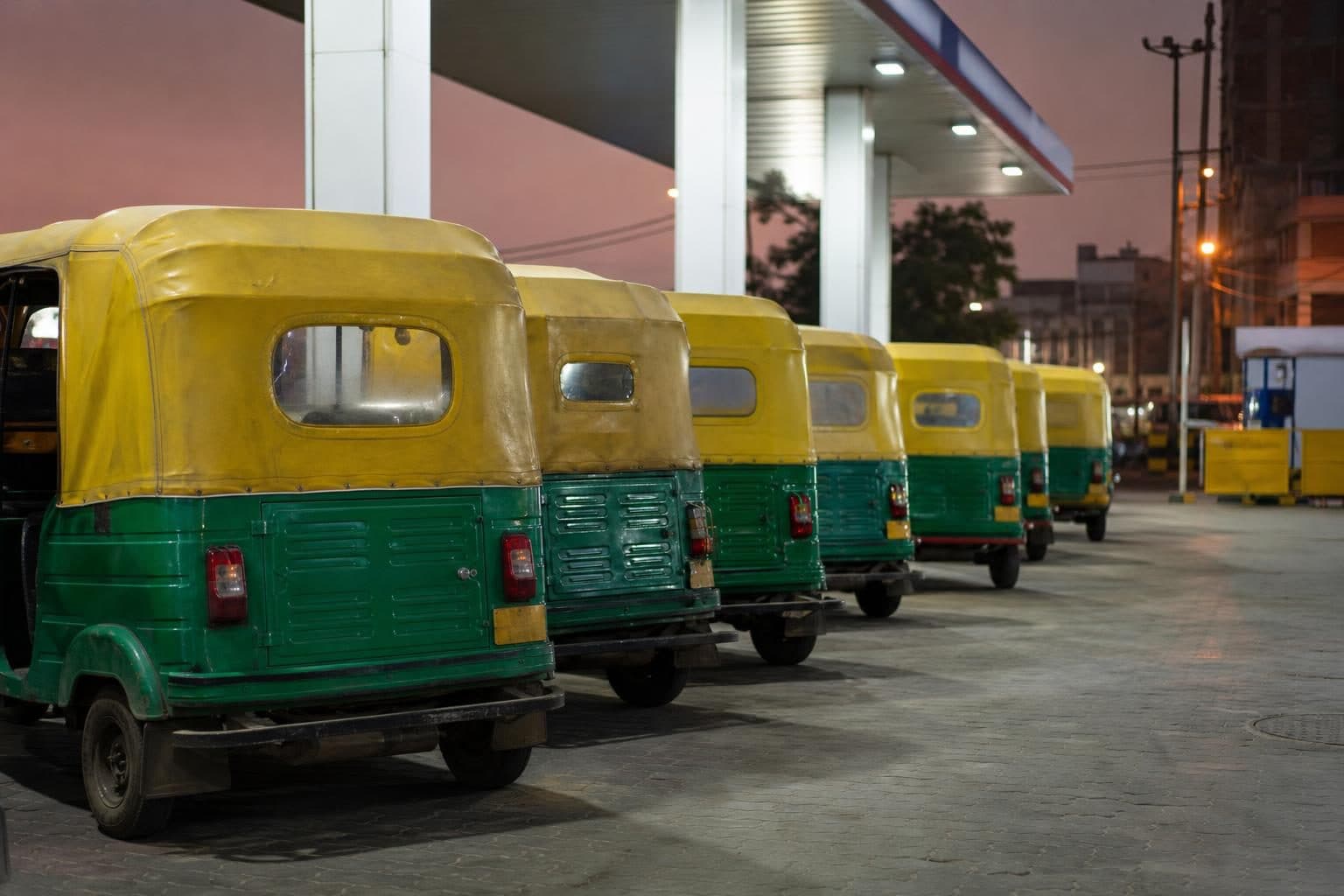
The conversion went through anyway. Old two-stroke autos were replaced or converted, and new CNG three-wheelers with four-stroke engines took over the market. The Delhi Transport Corporation built up one of the largest CNG bus fleets in public transport. The court had capped the number of auto-rickshaw permits in 1997 and raised the ceiling to 100,000 in 2011, issued for CNG vehicles; the cap has not been changed since.
A decade later the policy moved again. Delhi's government decided to issue its remaining permits only to battery-electric autos, and in 2024 the Supreme Court rejected a manufacturer's plea to raise the cap, holding that the preference for cleaner vehicles was legitimate. So CNG, once the clean option forced on the fleet, became the incumbent that electric three-wheelers now displace.
The fuel that made this possible is described in the guide to what CNG is.
What a CNG three-wheeler looks like inside
The modern CNG auto-rickshaw is a purpose-built vehicle. A single-cylinder four-stroke engine of roughly 200–250 cc sits under the rear bench, the cylinder is mounted behind the passengers or beneath them, and a small gasoline tank is often kept for starting and for emergencies. The engine runs on gas almost all the time. Because a three-wheeler stops and starts constantly and rarely leaves the city, the short range of a compressed gas tank matters less than it would on a car.
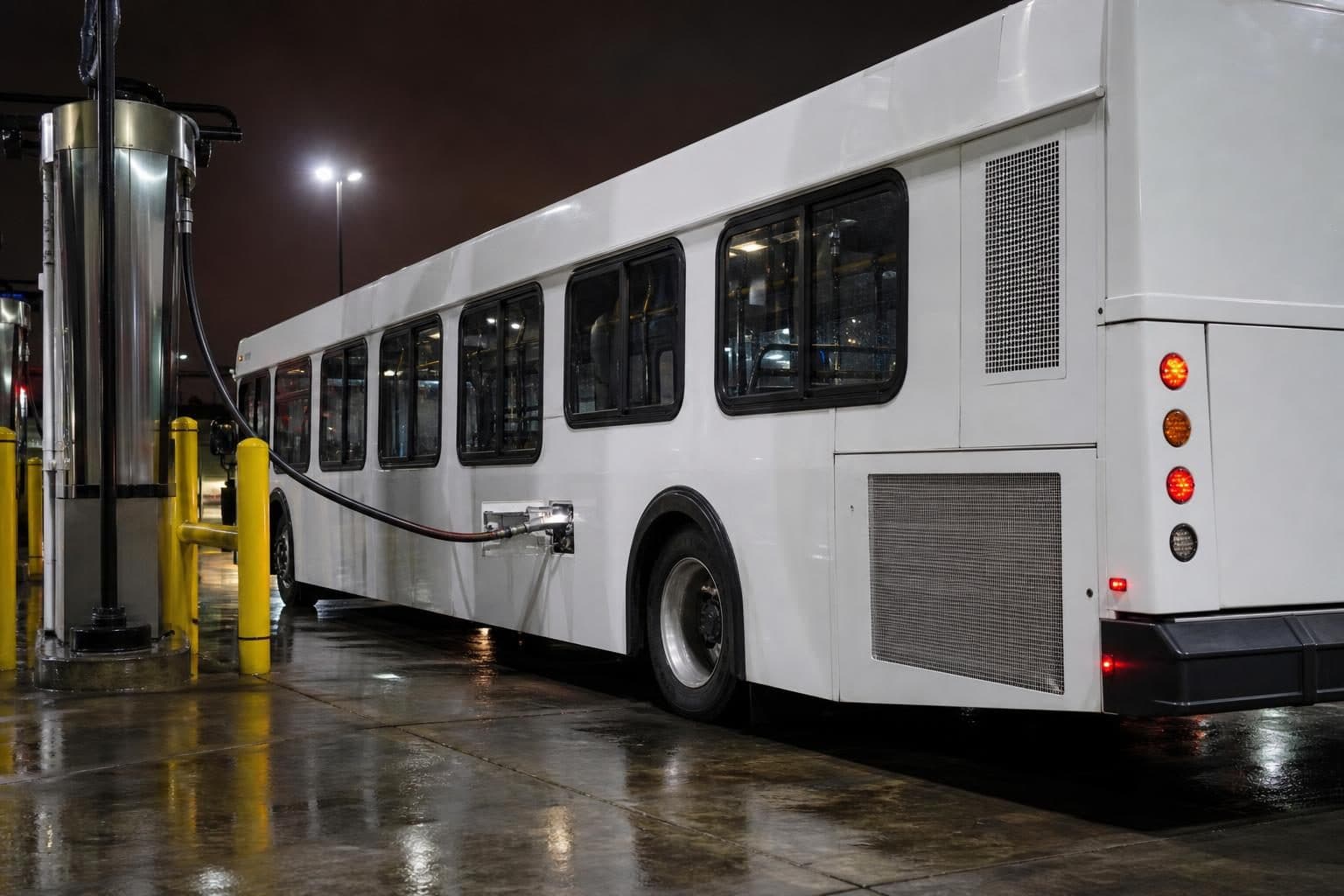
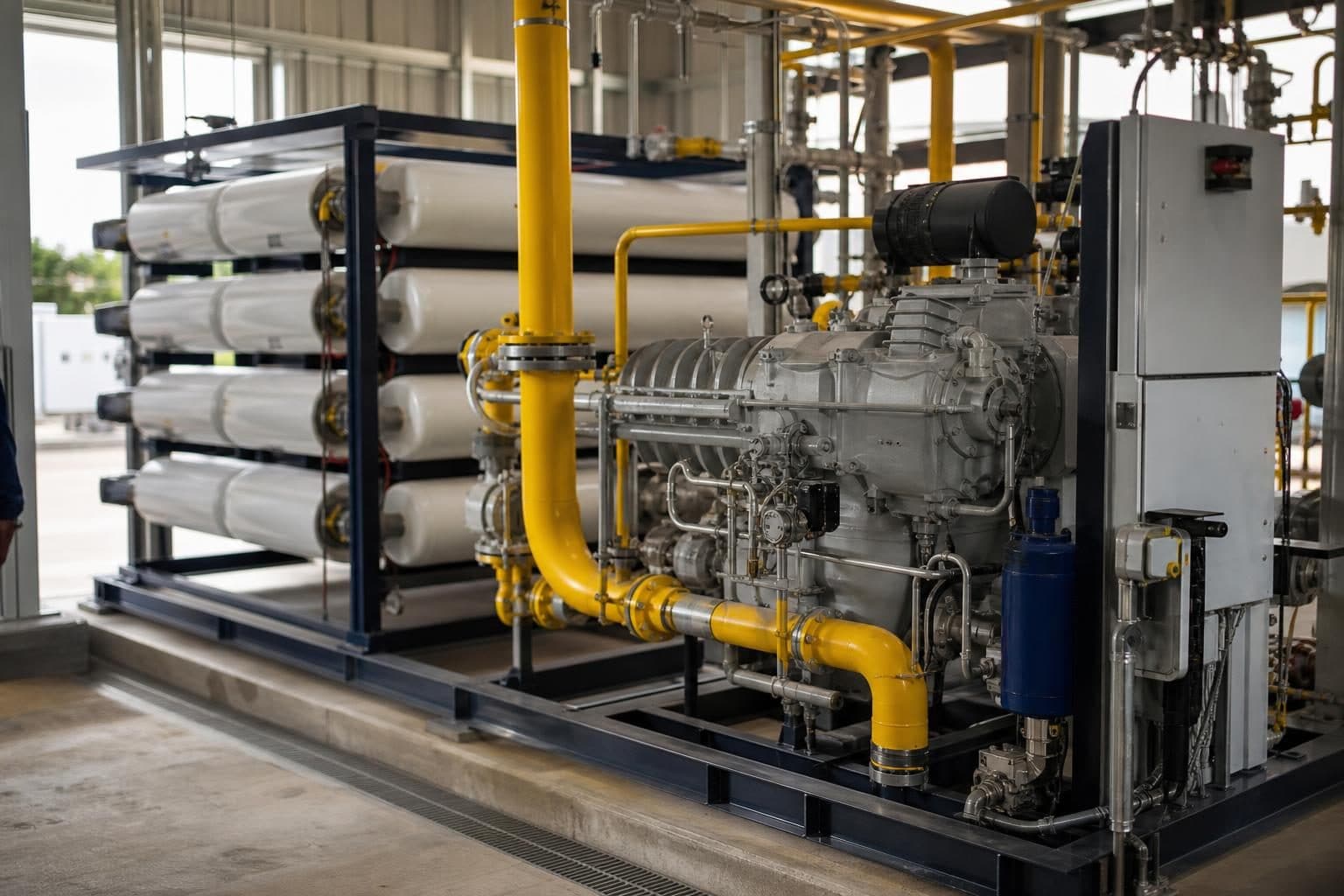
Refueling is where the drivers feel the system. An auto-rickshaw in a busy Indian city may fill once or twice a day, so the location and opening hours of stations shape a driver's working day. Stations depend on city gas distribution networks, which in India are licensed area by area by the Petroleum and Natural Gas Regulatory Board. Where a city has no pipeline yet, stations are supplied by cascades of cylinders trucked in from a compressor elsewhere, which raises the cost of every kilogram sold and limits how many vehicles one station can serve.
The Philippines: tricycles and a long list of options
The Philippine tricycle, a motorcycle with a sidecar, is the backbone of local transport outside the big roads, and for decades most ran on small two-stroke engines. The country's Department of Energy promoted CNG, LNG, LPG and electric conversions for public vehicles, and CNG tricycles were trialed with a view to bringing three-wheelers into the Natural Gas Vehicle Program for Public Transport, which had started with buses.
Results were uneven. A fuel swap on an unchanged two-stroke leaves the oil smoke and the scavenging losses in place, and the research on tricycles kept pointing back to the engine itself: direct-injection retrofits and four-stroke replacements did better than any change of fuel. For CNG, the obstacle was infrastructure: compressed gas needs a supply line or deliveries to each station, and the Philippines had almost no gas distribution beyond the Batangas power plants fed by the offshore Malampaya field.
The storage problem on a small vehicle
A worked example shows why motorcycles lagged behind three-wheelers. At 200 bar and 15 °C methane weighs about 167.75 kg/m³, so 2 kg of gas occupies about 11.9 liters. With the wall thickness of a steel or composite cylinder added, the tank becomes a solid object of around 15–20 liters outside volume and several kilograms of weight, sitting where a motorcycle has no spare room. A three-wheeler can carry it behind the seat; a scooter cannot.
Drop the pressure to 60 bar and the same 2 kg would need about 44 liters, because methane at 60 bar and 15 °C weighs only about 45 kg/m³. That is far worse. The appeal of low pressure lay elsewhere: thinner, lighter walls, freedom to shape the tank around a frame, and much simpler compressors at the refueling point. Several developers in the 2000s tried to close the gap by filling 5–10 liter low-pressure tanks with activated carbon, so the gas would adsorb onto the carbon surface and pack more densely than it would as free gas at the same pressure. The physics of that idea is covered under adsorbed natural gas.
Adsorbent tanks were tested on scooters in Southeast Asia, but none reached mass production. Activated carbon gives back less gas than it takes in when cold, and filling rapidly warms the bed, so real capacity at the pump fell short of laboratory figures.
The first factory CNG motorcycle
The answer, when it came, was to redesign the motorcycle around the cylinder. In July 2024 Bajaj Auto launched the Freedom 125 in India, presented as the world's first production CNG motorcycle. It carries a 2 kg CNG cylinder horizontally under a long seat, protected by a trellis frame, and a 2-liter gasoline tank as a reserve. The manufacturer claims about 102 km per kilogram of CNG, which gives roughly 200 km on gas and about 330 km in total with the gasoline reserve.
Those numbers tie back to the worked example above. Two kilograms is close to the practical limit for a 125 cc commuter at 200 bar, and it covers a typical Indian city commute for several days. The bike is bi-fuel, like most converted cars, because India's CNG stations remain concentrated in cities that have piped gas networks.
If a fleet of delivery two-wheelers runs fixed urban routes near CNG stations, the economics resemble those of converted taxis, set out on the page about NGV conversion. Outside those cities, refueling access decides everything, and a station network grows only as fast as gas can be delivered to it, by pipe or by truck.