A white 40-foot trailer backs up to a fenced pad behind a ceramics plant, its rear cabinet bristling with valves. The driver connects two hoses, opens a valve, unhooks the tractor and drives off with an empty trailer collected from the same pad. For the next day or two, the kilns run on the gas in that trailer. Nobody laid a meter of pipe.
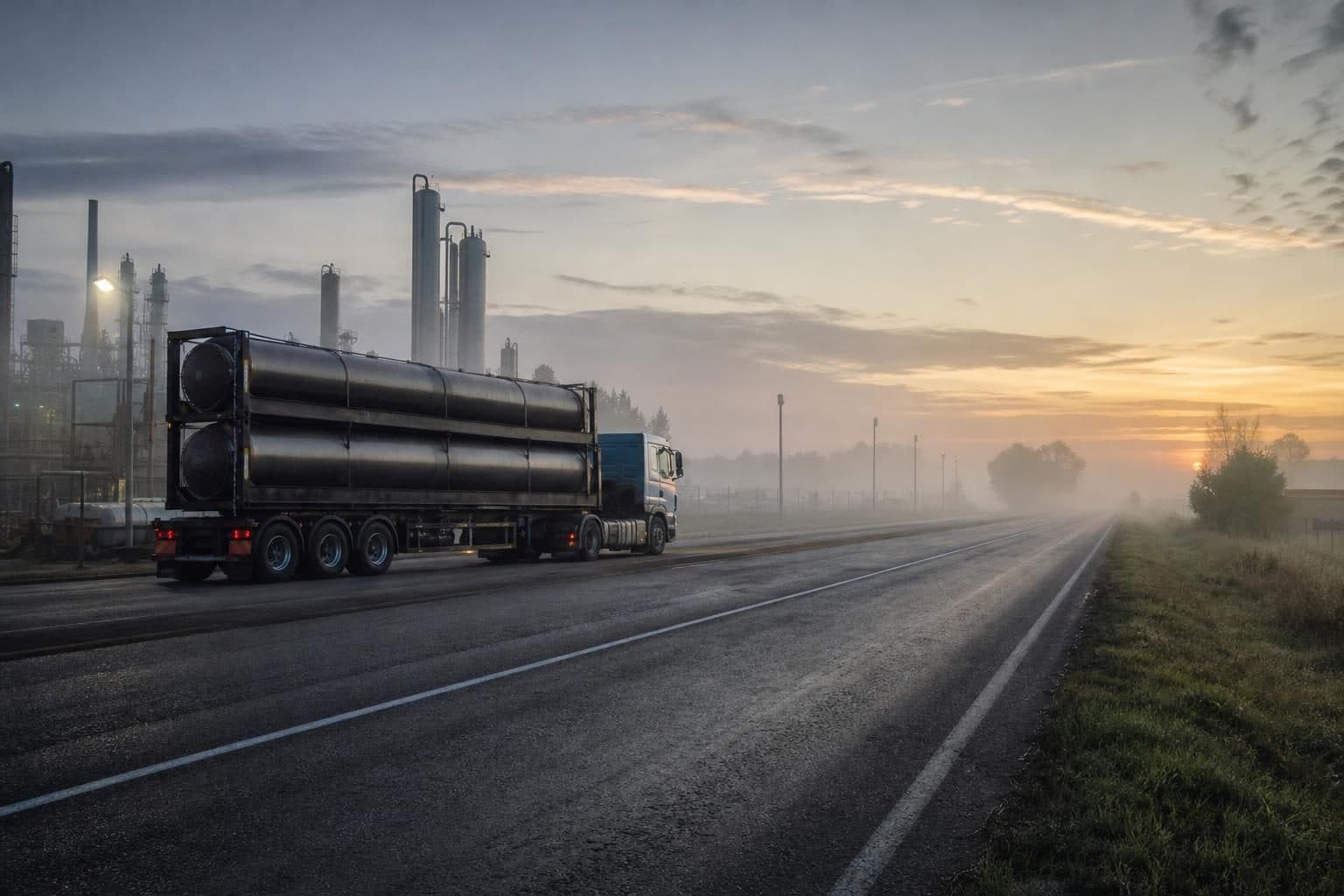
That swap is the whole idea of a virtual pipeline: gas compressed or liquefied at a source, carried by road in containers, and returned to pipeline conditions at the customer's fence. The phrase pipeline on wheels describes the same thing and is used interchangeably with it.
How a pipeline on wheels is put together
Every virtual pipeline has three links. At the source sits a mother station: a compressor that fills trailers to 200–300 bar, or a small liquefaction plant that cools gas to a liquid. The source might be a high-pressure transmission line, a gas field with no outlet, or a biogas upgrading plant. Then comes the transport, a fleet of trailers on a fixed rotation. At the customer sits the receiving end: a decompression skid for CNG or a vaporizer for LNG, feeding the plant's own low-pressure network.
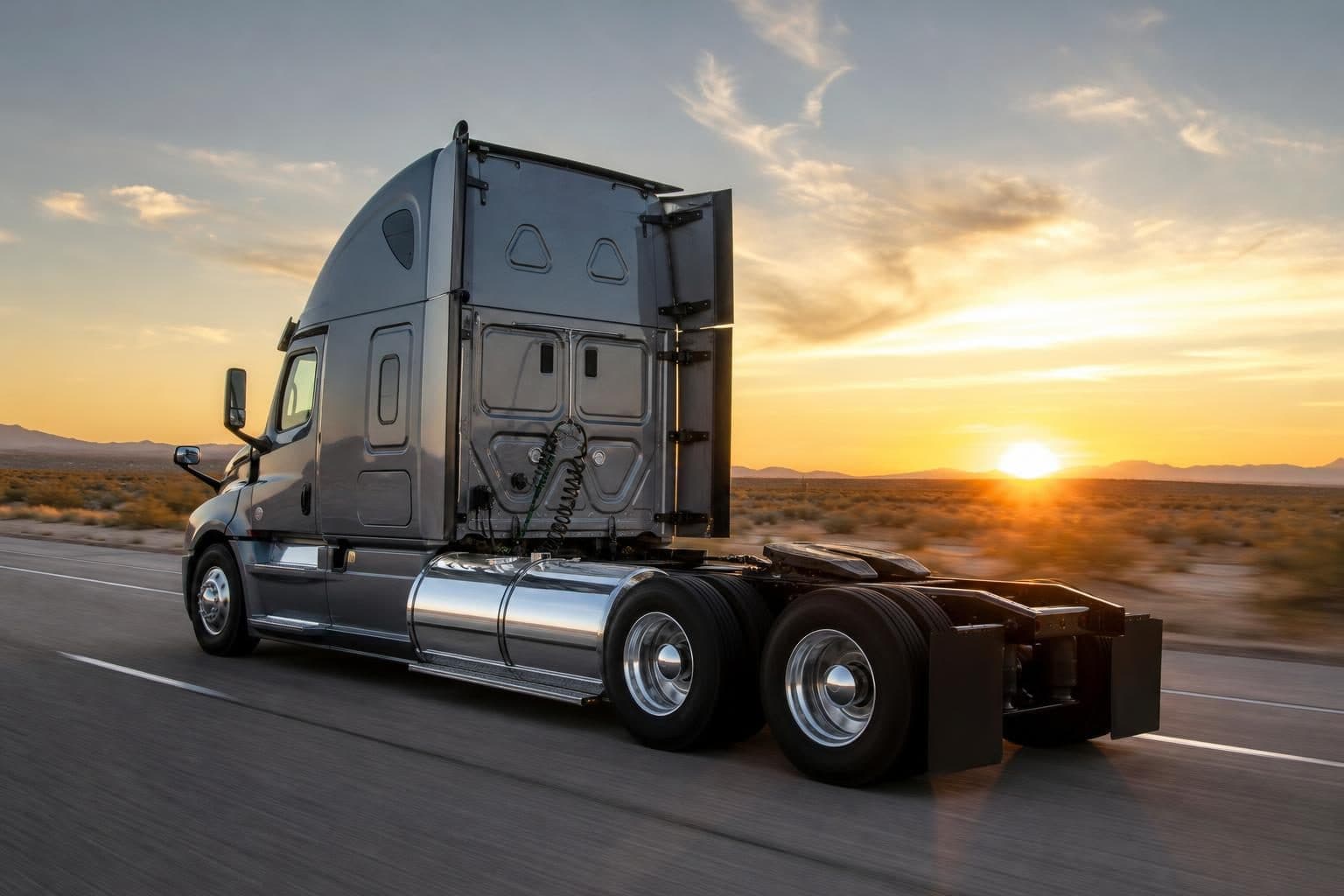
The logistics are what make it work. Most CNG schemes run on drop-and-swap: one trailer stays connected and discharging while another is on the road and a third is being filled. Delivery frequency follows consumption, so a large customer might take several trailers a day and a small one a trailer a week. Telemetry on the trailer's pressure tells the dispatcher when the next swap is due.
A pipeline on wheels can also be temporary. Utilities park CNG trailers at a town's gate station while a transmission line is repaired, and gas companies use them to supply a new housing area for the years before the main arrives.
CNG trailers: from steel tubes to composite modules
The early CNG trailers were jumbo tubes: a handful of long steel cylinders, drawn in one piece without welds, strapped to a flatbed. Steel is cheap and well understood, and ISO 11120 covers tubes of this kind. It is also heavy. A steel trailer reaches the legal gross weight limit long before it reaches the volume a truck could carry, so payloads stay modest at a few thousand standard cubic meters.
Composite pressure vessels changed the economics. Type III cylinders use a thin metal liner wrapped in carbon or glass fiber; Type IV vessels use a plastic liner, with the composite carrying all of the load, built to standards such as ISO 11119-3. Modules of these cylinders, framed into a standard 40-foot container footprint, carry far more gas within the same weight limit. One recent 40-foot composite module is rated for almost half a million standard cubic feet of CNG, or renewable natural gas, which is about 14,000 standard cubic meters.
A worked example converts that into mass. At 15 °C and atmospheric pressure, methane weighs about 0.68 kg/m³, according to NIST reference data. So 14,000 scm of nearly pure methane is about 9.5 tonnes; pipeline gas with some ethane comes out slightly heavier, so 9–10 tonnes is a fair range. In energy terms that is close to 3,700 gasoline gallon equivalents, at 2.567 kg each.
| Trailer type | Construction | Typical working pressure | Indicative load per trailer |
|---|---|---|---|
| Steel jumbo tubes | Type I all-steel | 200–250 bar | a few thousand scm |
| Composite module, 40 ft | Type III or IV composite | 250 bar and above | about 14,000 scm, roughly 9–10 t |
| LNG semitrailer, ~50 m³ | Vacuum-insulated double wall | a few bar | about 19 t at 90 % fill |
LNG road tankers
LNG reaches a much higher density without high pressure. Methane boils at −161.5 °C at atmospheric pressure, and the liquid weighs about 422 kg/m³, more than 600 times the density of the gas at 15 °C. The tankers are double-walled, with vacuum and multilayer insulation between an inner stainless vessel and an outer shell, and they run at only a few bar.
Take a semitrailer with about 50 m³ of tank volume, filled to 90 percent to leave vapor space. It holds about 45 m³ × 422 kg/m³ ≈ 19 tonnes of methane-rich liquid, roughly twice the gas a composite CNG module carries. That ratio is why long routes tend to favor LNG.
LNG brings costs of its own. Liquefaction takes energy and capital, and small-scale plants cost far more per tonne than export terminals. Heat leaks in constantly, so stored LNG slowly warms and boils; the vapor has to be used, recompressed or vented, and storage time is limited. At the customer, a satellite station with an insulated storage tank and ambient-air vaporizers turns the liquid back into gas. The same tankers supply truck stations, which the page on LNG trucking describes.
Receiving the gas: decompression and regasification
A CNG trailer arrives at 200–250 bar, and the customer's burners need a fraction of a bar to a few bar. The pressure has to come down in stages, and each stage cools the gas. NIST property data show that throttling pure methane from 250 bar and 15 °C to 5 bar, with no heat added, leaves it at about −82 °C. Steel pipework, regulators and seals do not tolerate that, and the moisture in the air outside the pipes freezes onto them.
Decompression skids therefore heat the gas before or between the pressure-reducing stages, usually with a hot-water bath or heat exchanger fired by a small share of the delivered gas, or with waste heat from the customer's process. The skid also meters the gas, adds odorant if the customer's network needs it, and switches automatically to the standby trailer when the active one runs low.
For LNG the receiving equipment is a vaporizer. Ambient-air units with large finned tubes are common for moderate flows; water-bath or fired vaporizers serve larger or colder sites. Either way, a virtual pipeline natural gas customer ends up with the same low-pressure gas a mains customer gets.
Safety on the road rests on the vessels and their valves. Each cylinder in a CNG module carries a pressure relief device that vents gas if a fire heats it, and manifold valves are grouped in a protected cabinet at the rear. Composite modules are designed to keep their center of gravity low, since a tall stack of cylinders on a curved highway ramp raises rollover risk. Drivers carry dangerous-goods training for UN 1971, compressed natural gas, or UN 1972 for the refrigerated liquid, and in Europe the whole combination is approved under ADR.
Virtual pipeline economics: trucks against steel in the ground
A pipeline's cost is mostly paid before the first cubic meter flows, and it scales with length, terrain and the number of road and river crossings. Once built, it moves gas very cheaply. Trucking reverses that pattern. The fixed investment is modest, a mother station, some trailers and a receiving skid, but every delivery costs fuel, driver time and wear, so costs rise with both distance and volume.
That split decides where each one wins. A customer far from the grid with modest, steady demand favors trucking. A large, long-term load near an existing main favors pipe. Published break-even studies disagree widely, because they depend on gas price, labor costs, road conditions and how long the customer will stay. Any project needs its own numbers, and if your site's demand might grow quickly, the trucking scheme should be planned as a bridge to a future pipe connection.
Between the two transport forms the logic is similar. CNG needs only a compressor and a decompression skid, so it suits shorter routes and smaller loads. LNG needs a liquefaction plant or access to an existing terminal, but each truck carries about twice the gas, so it suits longer routes and larger customers. The broader physics of the two forms is set out in CNG vs LNG.
Who buys gas by the trailer
Industrial heat is the core market: ceramics and glass plants, food processors, laundries and dryers that burn oil or propane today and sit beyond the grid. Mines in remote regions take LNG for power generation and heavy equipment. Islands without pipeline links import LNG in ISO containers, carried by ship and then by truck. Small towns in regions with no distribution network receive gas for local grids before a main reaches them.
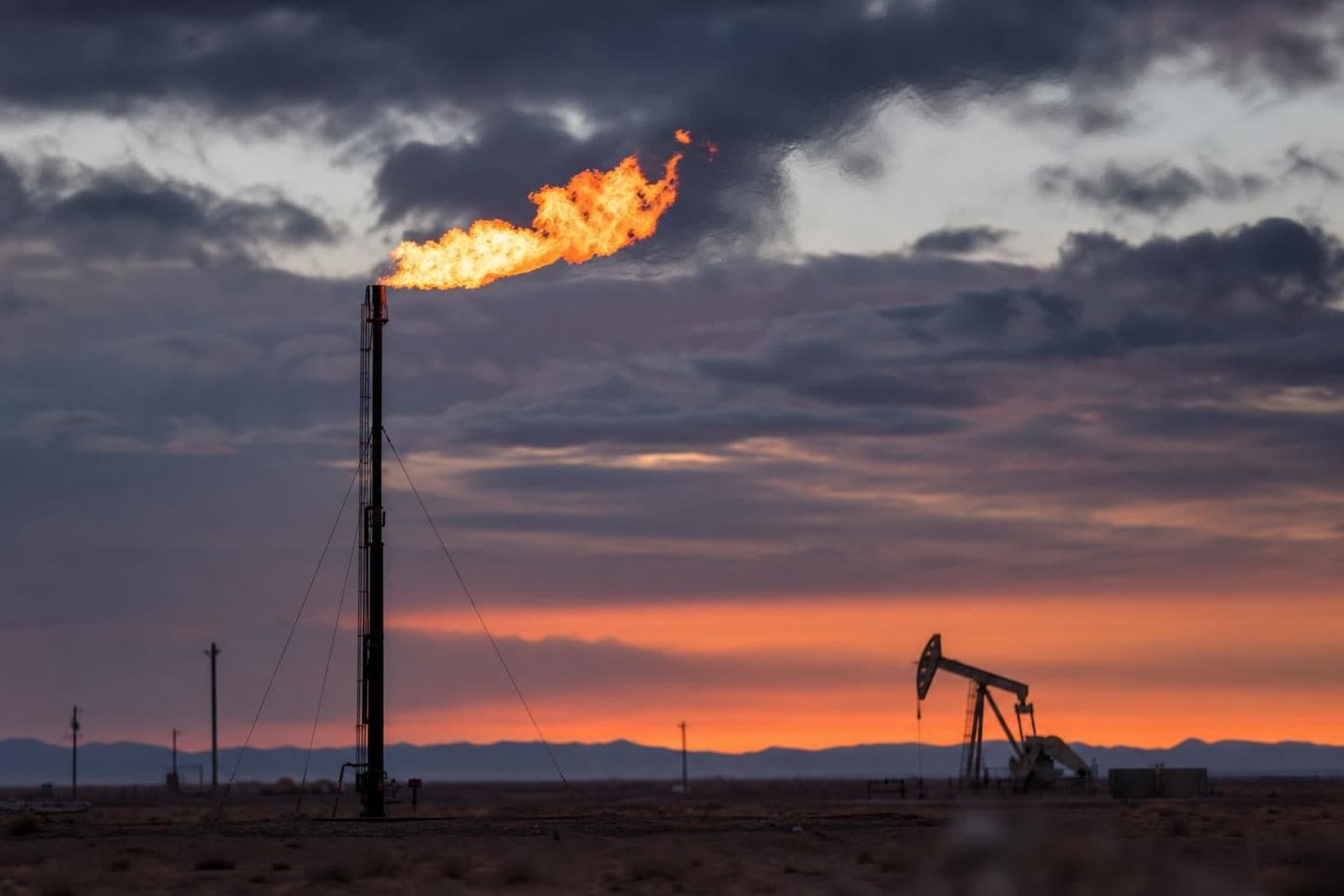
Another flow runs in the opposite direction. Farm digesters and landfills produce biomethane at sites far from a gas main, and trailers carry it to a grid injection point. The production side of that trade is covered under renewable natural gas. Gas that sits at an oil field with no route to market at all, and is often burned in flares, is the subject of the page on stranded gas.
For a fleet operator, a virtual pipeline natural gas supply also makes a CNG station possible at a depot with no gas main, a layout explained on the page about CNG fueling stations. In practice, that means the compressor sits at the source and the depot only needs a dispenser and a decompression skid.